

A Guide to Setting Up a Commercial Kitchen
Before you can even think about firing up the stoves and plating your first dish, you need a rock-solid plan. Honestly, this is the most critical ingredient in your entire venture. Setting up a commercial kitchen is a complex journey, and it’s about a lot more than just picking out shiny new equipment. You've got to think through costs, timelines, and all the regulatory hoops you'll need to jump through.
Think of this phase as creating the detailed blueprint for your future success.
Your Blueprint for a Successful Kitchen Launch
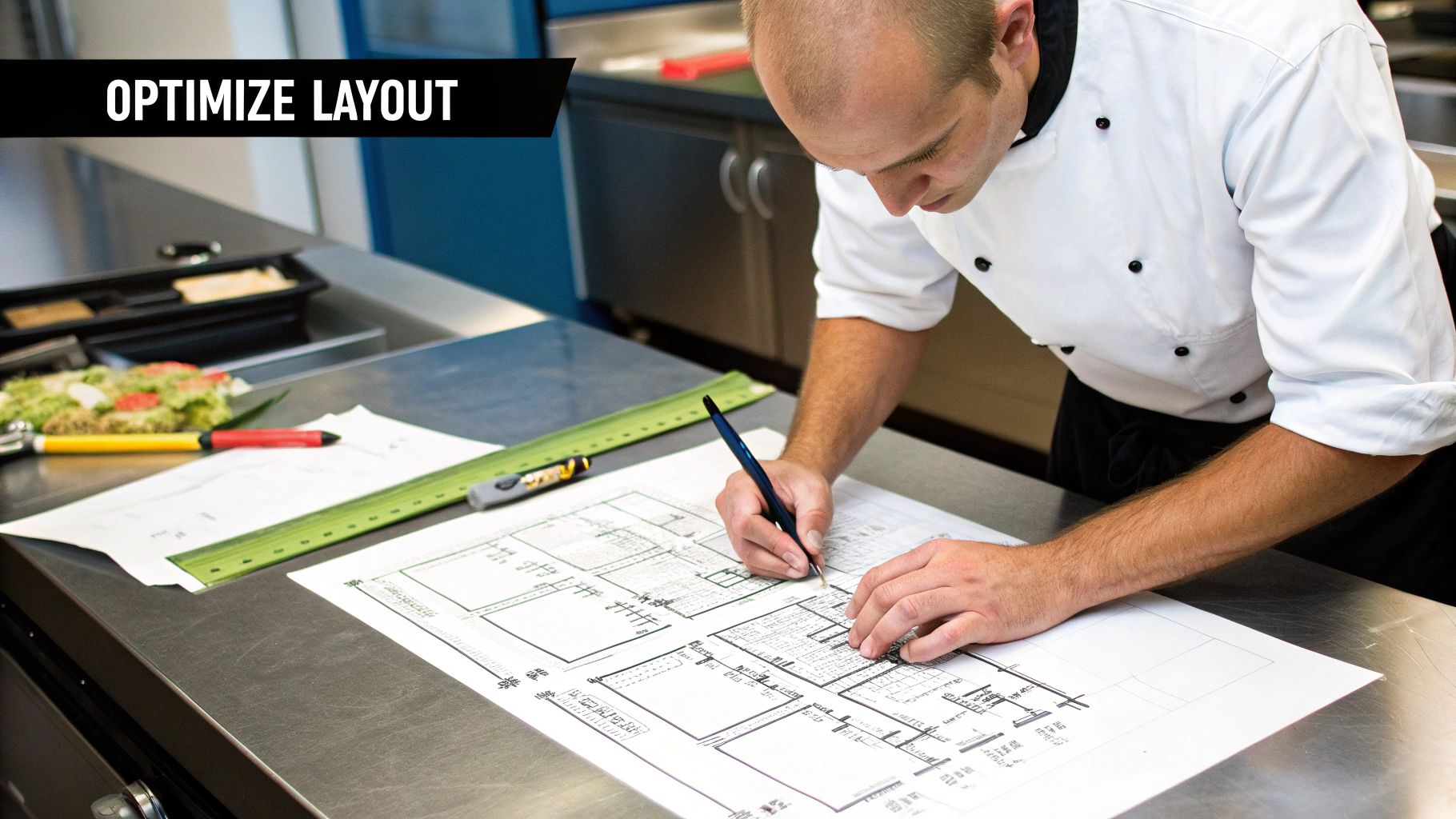
Turning your vision into a real, fully compliant, and operational kitchen starts long before you preheat the first oven. This initial planning stage is where you build the foundation for your entire foodservice operation, making it arguably the most important part of the whole process.
Take an honest look at your concept, because it’s going to guide every single decision you make from here on out. Are you launching a high-volume ghost kitchen focused on cranking out delivery orders, or are you creating an intimate bistro where the unique dining experience is everything? Your answer will directly shape your budget, layout, and equipment needs.
Creating a Realistic Financial Plan
A detailed budget is absolutely non-negotiable. So many new businesses stumble and fail because they completely underestimate the true cost of getting started. A classic mistake is focusing only on the big-ticket equipment purchases while totally overlooking other massive expenses.
To sidestep that pitfall, make sure your financial plan accounts for all of this:
- Renovation and Build-Out Costs: This is the big one. We're talking plumbing, electrical work, flooring, and ventilation installation. These can easily eat up 40-50% of your total budget.
- Permits and Licensing Fees: Navigating the maze of city, county, and state regulations isn't free. These fees can add up faster than you think.
- Initial Inventory and Supplies: This covers your first major food order, plus all the smallwares, cleaning supplies, and disposables you'll need to open your doors.
- Contingency Fund: Stuff happens. Always, always set aside at least 15-20% of your total budget for those unexpected delays, surprise repairs, or other unforeseen costs.
A well-structured budget doesn't just list expenses; it's your main decision-making tool. It will help you prioritize where to spend, find potential savings, and go after financing with a crystal-clear picture of your needs.
Assembling Your Project Team
Here’s a reality check: you can’t do this all alone. A successful kitchen launch depends on a team of qualified professionals. If your project involves any significant construction, finding the right general contractor is absolutely essential. Before you hire anyone, you need to understand the essential questions to ask general contractors to make sure you're picking the right partners for the job.
Beyond the contractor, you'll likely need to bring in architects or kitchen design specialists who really get the unique workflow and compliance demands of a commercial food environment. A detailed plan makes it so much easier to communicate your vision to these pros, ensuring everyone is on the same page from day one.
For a more exhaustive breakdown, our guide on the complete checklist for opening a restaurant is an excellent resource. Getting this initial blueprinting phase right sets the stage for everything that follows.
Navigating Health Codes and Securing Permits
Let's be honest: diving into the world of health codes and permits can feel like you’re trying to read another language. For many aspiring restaurant owners, this is the most intimidating part of the entire process. But it’s entirely manageable if you approach it correctly.
This isn't just about endless paperwork. It’s about creating a safe environment for the public and building a solid foundation of trust with both your future customers and the local authorities. Think of it as a series of checkpoints, not one giant hurdle. Each permit you secure is a green light, confirming you’re on the right path. Get this wrong, and you could face hefty fines or even a complete shutdown before you ever serve a single dish.
Decoding the Necessary Licenses
Your first real task here is to build a master list of every single permit and license your specific operation will need. And I do mean specific. The requirements can vary dramatically between cities, counties, and states. What a small bakery in Austin needs will look different from what a full-service restaurant in Chicago requires.
Your new best friend is your local health department's website. This is your primary source of truth. Look for a "new food establishment" packet or a similar guide, which usually lays out everything you'll need.
Here’s a general idea of what to expect on your list:
- Business License: This is the standard requirement for any business operating within a city’s limits.
- Food Handler's Permit: Often, every employee who touches food will need one. Many places also require at least one manager on-site to have a more advanced Food Protection Manager Certification.
- Health Department Permit: This is the big one. It's the official certificate saying your kitchen meets all the sanitary and safety standards to operate.
- Seller's Permit: If your state has a sales tax, you’ll need this to legally collect and send taxes from your sales.
- Building Permits: If you're doing any construction or significant renovations, you'll need permits for plumbing, electrical, and any structural changes.
The most common mistake I see new owners make is assuming they can figure this out later. Start your research on day one. I highly recommend creating a simple spreadsheet to track each permit: list the issuing agency, the application fee, and the submission deadline. This little bit of organization will be an absolute lifesaver.
Preparing for the Health Inspection
Let's walk through a real-world scenario. Imagine you're opening a small cafe, and the health inspector's visit is your final exam before you can open your doors. They aren't there to trick you; they are there to verify you've followed a very specific checklist designed for public safety.
An inspector will scrutinize everything, from your big-ticket equipment down to your daily processes. They’ll check for proper handwashing stations complete with hot water, soap, and single-use towels. They'll pull out a thermometer to make sure your refrigerators are holding food below 40°F (4°C) and that your hot-holding equipment is keeping food safely above 140°F (60°C).
Your paperwork is just as critical as your physical setup. A well-organized HACCP (Hazard Analysis Critical Control Point) plan shows the inspector you have a systematic, professional approach to food safety. This plan identifies potential hazards and clearly outlines how you'll control them—for example, by logging refrigerator temperatures twice a day. On a related note, ensuring your kitchen meets all emergency exit signage requirements is another crucial part of overall compliance and safety.
When the inspector walks through, be ready to answer questions confidently. Explain your cleaning schedules, how you prevent cross-contamination between raw and cooked foods, and where staff stores personal items (hint: never in food prep areas). A professional, organized demeanor goes a long way. It helps build a positive relationship with your inspector, turning what could be a stressful audit into a smooth approval.
Designing a Kitchen for Peak Efficiency
Your kitchen’s layout isn't just about where you put the equipment; it’s the engine that drives your entire operation. A smart, efficient design can be the difference between a smooth, profitable service and absolute chaos. Get it wrong, and you’re looking at slow ticket times, frustrated staff, and even serious safety hazards.
We’re not talking about generic templates here. It's about creating a streamlined environment that’s custom-built for your specific menu and service style. The goal is to map the journey of every ingredient, from the moment it arrives at the back door to the second a finished plate hits the pass. Every step needs to be logical and deliberate, cutting down on the wasted motion that kills productivity. A chef shouldn't have to sprint across the kitchen for an ingredient—those lost seconds on every order add up fast.
Choosing Your Kitchen's Core Layout
The right layout depends entirely on what you're serving. The high-volume setup of a ghost kitchen would be a complete disaster for an intimate bistro. Understanding these fundamental configurations is the first step toward building a kitchen that actually works for you.
There are three main layouts you'll see in most professional kitchens:
- Assembly Line Layout: This is the go-to for quick-service spots, concepts with simple menus, or any kitchen that cranks out a high volume of similar items. Think of a classic pizza shop or a sandwich counter. Every station—prep, cooking, plating—is arranged in a sequential line, mirroring the order of production.
- Island Layout: Here, a central block of equipment, usually the main cooking line with ranges and ovens, creates an "island." All the other stations for prep and warewashing are set up along the perimeter walls. This layout is fantastic for communication and works well in larger kitchens where multiple chefs are working at once.
- Zone-Based Layout: This is a hugely popular and flexible option. You create distinct "zones" for each task: a food prep zone, a hot line for cooking, a cold station for salads, and a dedicated warewashing area. It's highly adaptable and a great fit for restaurants with more complex menus.
For a deep dive into the pros and cons of these models, you might be interested in our complete guide to commercial kitchen layout and design. It offers visual examples that can help you map out your own space effectively.
Mapping Your Operational Flow
Once you have a layout in mind, it’s time to get specific. Seriously—grab a floor plan and physically trace the path of both your food and your staff. This simple exercise can be incredibly revealing.
Start where the food comes in: receiving. Your dry storage, refrigerators, and freezers should be as close as possible to the delivery door. You don’t want your team hauling heavy boxes through a busy cook line.
From storage, the flow should move logically to the prep areas. Raw proteins, for instance, need their own dedicated space to prevent cross-contamination. From there, ingredients move to the main cooking line. The final path should lead directly to a plating and expo area right near the service exit, ensuring food gets to the dining room hot and fast. This deliberate mapping prevents dangerous backtracking and workflow collisions—the last thing you want is a server returning with dirty dishes crossing paths with a chef carrying a hot pan.
Creating Dedicated Workstations
Making the most of every square foot is crucial, especially when space is tight. This means creating dedicated, fully-equipped workstations where your team has everything they need within arm's reach. A line cook should never have to abandon their post mid-service to hunt down a clean pan or a specific spice.
Think about these essential stations:
| Station Type | Purpose | Essential Equipment |
|---|---|---|
| Cleaning & Warewashing | Sanitizing dishes, glassware, and cookware. | 3-compartment sink, commercial dishwasher, drying racks. |
| Storage Area | Holding dry goods, refrigerated, and frozen items. | Dunnage racks, wire shelving, walk-in/reach-in coolers. |
| Food Preparation | Chopping, mixing, and portioning ingredients. | Prep tables, cutting boards, food processors, mixers. |
| Cooking Line | The primary cooking and finishing area. | Ranges, ovens, fryers, griddles, charbroilers. |
| Service Area | Plating, garnishing, and order hand-off. | Heat lamps, pass-through shelves, plating supplies. |
By designing a kitchen around a logical flow and dedicated stations, you’re doing more than just arranging equipment. You're building a system for speed, safety, and efficiency. This smart approach to setting up a commercial kitchen directly improves team morale and boosts your profitability on every single shift.
Choosing and Sourcing Your Kitchen Equipment
Picking the equipment for your kitchen is easily one of the biggest financial calls you’ll make. This isn't just a shopping trip; it’s a strategic investment that will define your kitchen's efficiency, workflow, and profitability for years. The right gear makes service feel seamless, while the wrong pieces can create constant bottlenecks and lead to some seriously expensive repair bills down the road.
Think of your equipment as the core tools of your craft. Just like a painter needs the right brushes, a chef needs reliable, functional, and appropriate equipment to bring their vision to life. This means every major purchase needs to be carefully aligned with your menu, your expected customer traffic, and the physical layout of your kitchen.
New vs. Used Equipment: The Big Debate
One of the first forks in the road you'll hit is whether to buy new or used equipment. Honestly, there's a strong case for both, and the smartest approach for most restaurants is probably a mix of the two. New equipment gives you the security of a manufacturer's warranty, the latest energy-saving features, and the peace of mind that you’re its very first owner. Of course, that security comes with a premium price tag.
On the other hand, used equipment can deliver huge savings—sometimes 50-70% off the list price—which frees up a ton of cash for other startup costs. The trade-off is the risk involved. Used gear rarely comes with a warranty and likely has a shorter lifespan. It all comes down to knowing where to invest and where you can safely save.
My personal advice? Splurge on new for your most critical, hardworking pieces—especially your refrigeration and your main cooking line. For things like stainless-steel prep tables, shelving, or sinks, high-quality used pieces are a fantastic way to save a bundle without taking on much risk.
The Used Equipment Inspection Checklist
If you decide to dip into the secondhand market, you need to think like an inspector. A "good deal" can quickly become a money pit if you don't know what to look for. Never, ever buy a piece of used equipment sight unseen.
Before you even think about handing over cash, give it a thorough, hands-on inspection:
- Refrigeration: Check the door seals for any cracks or gaps. Listen for a compressor that runs constantly (that’s a huge red flag). And bring a thermometer to make sure it actually holds the right temperature.
- Gas Equipment: Look for any signs of rust or corrosion on the gas lines and connectors. If you can, test the ignition to make sure all the burners light up quickly and evenly.
- Electrical Units: Inspect the cords and plugs for any fraying or other damage. Always ask to see it powered on to confirm it heats up properly and all the controls are working.
- General Condition: Keep an eye out for excessive rust, any dents that could mess with its function, and missing parts like knobs or racks. Those little things can be surprisingly pricey to replace.
Being diligent here is your best defense against a purchase you'll regret.
Prioritizing Your Core Equipment Needs
With your budget in mind, you can start making your shopping list. While every kitchen is different, there are universal categories of equipment that form the foundation of any professional foodservice operation. For a detailed rundown, it’s a good idea to check out a comprehensive commercial kitchen equipment list to be sure you haven’t missed any essentials.
The industry supporting these needs is massive. The global market for commercial cooking equipment hit USD 36.04 billion in 2023, with North America holding a huge 31.96% share. This market is only expected to grow, which reflects the constant demand for reliable and innovative kitchen gear. You can discover more about these commercial equipment market trends and see how they might shape future buying decisions.
This infographic breaks down the non-negotiable cleaning schedules you'll need to follow to keep your equipment in top shape and fly through health inspections.
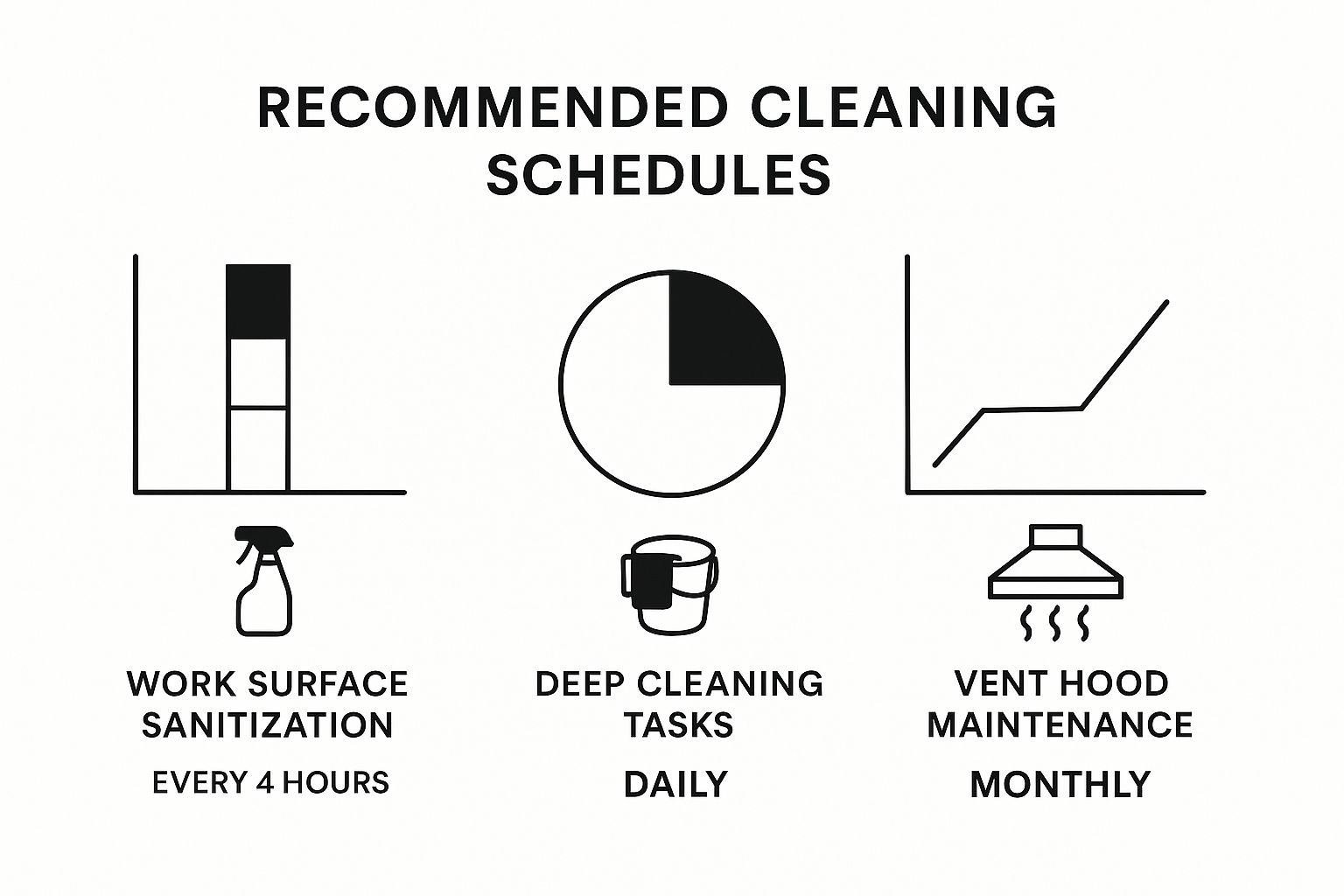
As you can see, sanitation isn't just an end-of-day task. It's a constant process, with surface cleaning happening multiple times throughout the day.
A Closer Look at Commercial Ovens
Your oven is often the heart of your hot line, and choosing the right one is crucial. The decision should be driven entirely by your menu. A high-volume pizzeria has completely different needs than a fine-dining spot that focuses on delicate pastries.
To help you decide when you're setting up a commercial kitchen, here's a quick comparison of the most common oven types and what they do best.
Commercial Oven Comparison Guide
This table breaks down the most common commercial oven types to help you find the right fit for your restaurant's menu, volume, and cooking style.
| Oven Type | Best For | Key Advantage | Consideration |
|---|---|---|---|
| Convection Oven | Roasting, baking, high-volume cooking | Even cooking and fast preheating due to internal fans | Can dry out delicate items if not used carefully |
| Combination Oven | Versatile menus; steaming, baking, roasting | Combines steam and convection for ultimate flexibility | Higher initial cost and requires more training |
| Deck Oven | Pizza, artisan breads | Intense, direct heat from stone decks creates perfect crusts | Slower preheat times and less versatile for other tasks |
| Conveyor Oven | High-volume pizzerias, sandwich shops | Consistent results with minimal labor; just set it and forget it | Takes up significant space and lacks cooking flexibility |
Making the right choice here is what allows your kitchen to execute your menu consistently and efficiently, even when you're slammed. It's a decision that pays off with every service.
Managing Installation and Passing Final Inspections
This is the moment. All those hours spent poring over blueprints and picking out equipment are about to pay off. The installation phase is where your vision finally starts to feel real, transforming from paper plans into a functional, breathing workspace. Getting this part right is absolutely critical to avoid last-minute headaches and costly delays right when you're itching to open.
Success here boils down to one thing: coordination. You’re not just installing equipment; you’re the conductor of an orchestra of specialized tradespeople. Your job is to make sure the general contractor, plumbers, and electricians are all working in a logical sequence, not tripping over one another.
For instance, it’s common sense, but you’d be surprised how often it gets mixed up. The electrician can't wire the walk-in cooler until the unit is actually assembled. The plumber can’t hook up your 3-compartment sink until it's set exactly where your layout says it should go. A clear timeline and constant communication are your best friends here, keeping the project on track and saving you from expensive rework.
The Critical Systems You Cannot Get Wrong
While every piece of your kitchen puzzle matters, there are two systems where you need absolute perfection: ventilation and fire suppression. These are non-negotiable for safety and legal compliance. Trust me, inspectors have zero tolerance for mistakes here.
Your commercial kitchen hood is more than just a vent; it's the heart of your kitchen's safety infrastructure. It must be installed to the manufacturer’s exact specifications and local fire codes. This means ensuring it has the proper overhang above your cooking line and that the makeup air system is balanced to perfectly replace the air being pulled out.
The fire suppression system, which is integrated right into the hood, is just as crucial. The nozzles have to be aimed precisely at the high-risk appliances, like your deep fryers and charbroilers. Hiring a certified professional for this install isn't a recommendation—it's a requirement. This is the one area where cutting corners can lead to catastrophic failure or, at the very least, an instant inspection fail.
Think of your kitchen like an ecosystem. If your ventilation isn't working correctly, it impacts everything—air quality, temperature, staff comfort, and even how well your gas appliances function. Getting these core systems right is foundational to a safe and efficient kitchen.
Your Pre-Inspection Walkthrough Checklist
Before you even think about scheduling that final inspection, you need to walk through the space with the eyes of an inspector. And I don't mean a quick glance. I mean a detailed audit to catch any potential red flags before the official shows up. A failed inspection can push your opening back by weeks, so this step is time well spent.
Use this checklist to guide your final once-over:
- Equipment Clearances: Is there enough breathing room between hot equipment (like fryers) and the walls? Is there proper clearance around your refrigeration for airflow? Pull out the spec sheet for every single piece of equipment and check.
- Sealed Surfaces: Run your hand along the joints where walls meet floors and countertops meet the backsplash. Every single gap must be sealed with a code-compliant caulk. This is huge for pest prevention and cleaning.
- Accessible Hand Sinks: Do you have a dedicated handwashing sink in your prep and cook areas? It must have hot water, soap, and paper towels, and it can never be blocked by equipment or storage bins.
- Proper Signage: Are all your required signs posted? This includes the "Employees Must Wash Hands" signs at every hand sink and clearly marked emergency exits.
- GFCI Outlets: Double-check that all electrical outlets near water sources—think sinks and dishwashers—are Ground Fault Circuit Interrupter (GFCI) protected.
This proactive approach to setting up a commercial kitchen is about more than just passing a test. It's about building a fundamentally safe, compliant, and efficient operation from day one. Prepare meticulously, fix what you find, and you'll get that coveted green light to open your doors with total confidence.
Of course. Here is the rewritten section, crafted to sound like it was written by an experienced human expert, following all the provided guidelines and examples.
Common Questions About Commercial Kitchens
Venturing into the world of food service always brings up a ton of questions. As you start moving from a great idea to a brick-and-mortar reality, some concerns seem to pop up again and again. Here are some straight, practical answers to the questions we hear most often from founders right in the thick of setting up their first commercial kitchen.
How Much Does a Commercial Kitchen Cost?
This is always the big one, and the honest-to-goodness answer is: it varies dramatically. You could be looking at anywhere from $25,000 for a tiny, bare-bones setup to well over $250,000 for a sprawling, fully loaded restaurant kitchen. The final number really gets shaped by your location, the size of your space, and the equipment you choose.
A good rule of thumb is to expect your equipment to eat up about 30-40% of your total budget. The biggest chunk, though, will likely be the renovations and build-out. Things like plumbing, electrical, and that all-important ventilation system will often take another 40-50%.
Always—and I mean always—build a contingency fund of 15-20% into your budget. This isn't just a suggestion; it's the safety net that will save you when unexpected construction hiccups or equipment delays inevitably happen. Forgetting this can sink a project before the doors even open.
What Is the Most Vital Piece of Equipment?
When it comes to legal compliance and basic safety, your ventilation and fire suppression hood system is, without a doubt, the single most critical piece of equipment you'll buy. It's expensive, it's legally mandated, and its placement dictates the entire layout of your cook line. There is absolutely zero room for error with its installation.
From a purely operational standpoint, the workhorse of your kitchen will often be a really versatile oven. For a lot of concepts, a good convection oven or a combination oven (which gives you both steam and convection cooking) is the one piece of equipment they lean on the most, every single day. Its flexibility is what makes it so invaluable for executing the bulk of a menu.
Can I Run a Commercial Kitchen from Home?
Generally speaking, the answer is no. Most cities and states have strict zoning laws and health codes that a standard home kitchen just can't meet. A residential kitchen simply isn't designed to handle the volume, sanitation, or safety requirements of a commercial operation—things like needing a three-compartment sink or a commercial-grade grease trap.
There is one exception: cottage food laws. These regulations exist in some places and allow you to sell low-risk foods made at home, like baked goods, jams, or candies. But you need to know that these laws come with some pretty significant restrictions.
- Product Limitations: You’re usually limited to non-perishable items that don’t require refrigeration.
- Revenue Caps: Most states cap your annual gross sales, which can be as low as $10,000 for a specific product.
- Direct Sales Only: You often have to sell directly to the consumer, which means no wholesale or online shipping.
Before you even think about going down this path, your very first call should be to your local health department to get the specific rules for your area.
What Are the Most Common Mistakes to Avoid?
It's a familiar story: so many enthusiastic entrepreneurs make the same preventable mistakes. Just being aware of these common pitfalls is the best way to steer clear of them as you set up your own commercial kitchen.
Here are the missteps we see most frequently:
- Underestimating the Budget: This one's a classic. It’s not just about the big-ticket items; it's failing to account for hidden costs like permits, professional fees, and that essential contingency fund.
- Ignoring Health Codes Early On: Waiting until late in the game to research local regulations is a recipe for disaster. It often leads to expensive and time-consuming redesigns.
- Designing a Poor Layout: Creating a kitchen with a clunky, inefficient workflow causes daily bottlenecks, slows down service, and really frustrates your staff.
- Buying Bad Used Equipment: It can be tempting to opt for the cheapest secondhand gear you can find, but without a thorough inspection, you can end up spending more on constant repairs than a new unit would have cost in the first place.
Your best defense against these headaches is thorough, front-loaded research. Investing your time in planning and due diligence at the beginning will save you an immense amount of money and stress down the road.
Equipping your new venture is a major step. For everything from walk-in coolers to the perfect commercial oven, The Restaurant Warehouse provides high-quality, new restaurant equipment at discounted prices, with flexible financing and fast delivery to get your kitchen up and running. Explore our full catalog and get expert support at https://therestaurantwarehouse.com.
About The Author

Sean Kearney
Sean Kearney used to work at Amazon.com and started The Restaurant Warehouse. He has more than 10 years of experience in restaurant equipment and supplies. He graduated from the University of Washington in 1993. He earned a BA in business and marketing. He also played linebacker for the Huskies football team. He helps restaurants find equipment at a fair price and offers financing options. You can connect with Sean on LinkedIn or Facebook.
Leave a comment