


No More Meltdowns: Ice Makers That Keep Ice Frozen
The Common Countertop Conundrum
Rent a Ice Machine that produces up to 50 lbs. to 400 lbs. of ice for $160 a month.
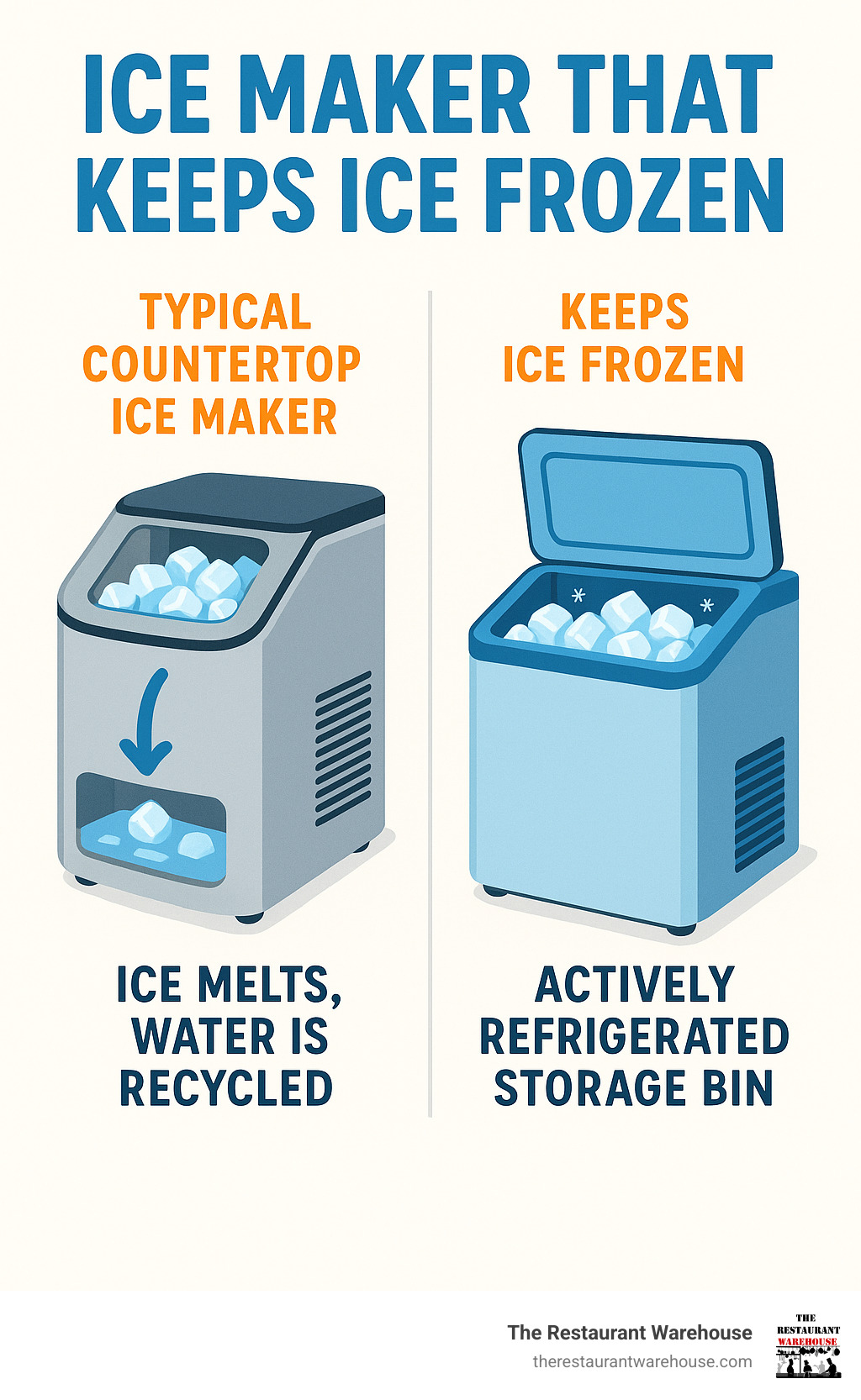
An ice maker that keeps ice frozen is typically not a standard countertop model. Most compact countertop units are designed for rapid ice production, not long-term storage. They produce ice quickly, but the ice in their bins will eventually melt and be recycled back into water.
For ice that stays frozen, look for:
- Built-in or Undercounter Ice Makers: These units often have truly refrigerated storage compartments.
- Commercial Ice Machines: Designed for high-volume production and to keep ice in a frozen state.
- Specific Hybrid Countertop Models: While rare, a few unique models might include a small, actively refrigerated storage bin.
The convenience of a countertop ice maker is clear. But so is the frustration of watching your fresh ice slowly turn back into water. If you've ever scooped up slushy, clumpy ice, you've seen the main design limit of most portable models firsthand. This guide will explain why this happens. We will also show you the ice makers that truly keep your ice perfectly frozen, ready for any use.
Ice maker that keeps ice frozen further reading:
Why Your Countertop Ice Maker Isn't a Freezer
Ever wonder why that fresh batch of ice from your countertop maker seems to melt so quickly? It's a common puzzle! The truth is, your trusty portable ice maker is a master at making ice, but it's not actually a freezer. These clever gadgets are built for quick, on-demand ice production, not for long-term storage. Think of it as a sprinter, not a marathon runner.
Most portable ice maker designs prioritize compactness and convenience. This means they often skip the heavy insulation and special cooling systems you'd find in a true freezer. This design choice has a big impact. The ice-making process itself creates some heat, and with limited insulation, that heat can quickly warm up the ice storage area. This is why the ice often feels a bit "wet" or "slushy" right when it's done. It's not a flaw; it's simply how these machines are designed to work – constantly providing fresh ice, even if some of it melts along the way. Your goal is quick ice, and that's what it delivers!
The Truth About Insulation
Let's clear something up about those ice bins. Most countertop ice makers have what we call passive insulation. Imagine a really good cooler you take to a picnic. It's fantastic at keeping things cold for hours, right? But eventually, the ice melts. That's because it slows down the melting process, but it doesn't actively make things colder. Your ice maker's bin works the same way. It's insulated, not refrigerated.
This means your ice maker's bin isn't like the freezer compartment in your kitchen fridge. A true freezer actively chills its contents, keeping temperatures well below freezing, typically around 0 degrees Fahrenheit (-18 degrees Celsius). But your portable ice maker produces ice at a slightly "warmer" temperature, usually around 27 degrees Fahrenheit (-3 degrees Celsius). This "warmer" ice is more eager to melt, especially when exposed to the warmth of your kitchen. This is the ambient temperature impact at play. Plus, the heat from the ice maker's motor, which is working hard to produce ice, also warms up the storage area. So, while the ice itself acts as a cold mass, it's constantly battling against the room's temperature and the machine's own operational heat. That's why an ice maker that keeps ice frozen usually needs a much more robust, actively cooled system.
How the Meltwater Cycle Works
So, what happens to that ice when it inevitably starts to melt? Good news: it's not wasted! Most portable ice makers have a really smart system designed to collect any meltwater. This water then cycles back into the main water reservoir to be used for the next batch of ice. Pretty neat, huh?
This clever meltwater recycling system means your machine can keep making ice without you constantly refilling it, as long as there's water in the reservoir. It uses special sensors to manage this. For instance, an ice-full sensor knows when the bin is packed and tells the machine to pause. A water-low sensor alerts you when it's time for a refill. This continuous production cycle is all about efficiency and convenience.
However, this constant cycle of ice forming, melting, and reforming is precisely why these machines can't store ice long-term in a truly frozen state. The ice is always a bit "wet" because it's part of this ongoing process. It's perfect if you're frequently using ice for drinks, but it's not the solution if you need to stock up on solid, hard ice for days. For that, you'll need an ice maker that keeps ice frozen with a different design altogether.
The Ultimate Guide to an Ice Maker That Keeps Ice Frozen
If your main goal is to always have plenty of hard, truly frozen ice on hand, then it’s time to look beyond the usual countertop models. The real secret here is getting a machine with a refrigerated storage bin – a genuine freezer compartment, not just a cooler. These types of ice makers are built for long-term storage. They make sure your ice is always solid and ready, preventing it from melting or clumping together. They often use powerful compressor technology, just like your home refrigerator, to keep things truly cold.
Built-In and Undercounter Ice Makers
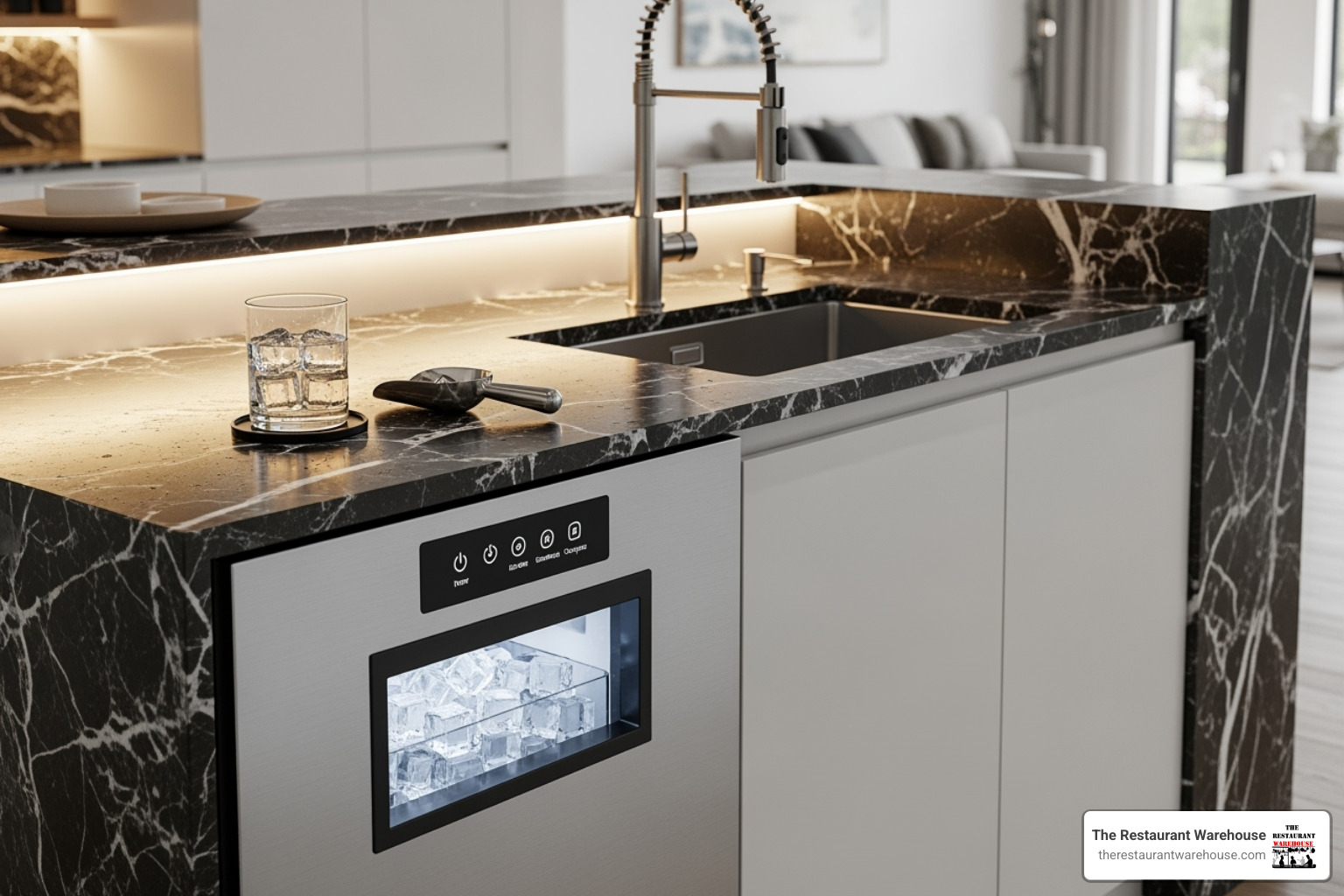
For homes and businesses that need ice that stays perfectly frozen, built-in and undercounter ice makers are truly top-notch. Imagine these units nestled neatly under your counter, much like a dishwasher. They offer a super convenient and permanent ice solution.
Unlike smaller portable units, undercounter ice makers connect straight to your water line. This means you never have to pour water in by hand – the machine handles it all, ensuring a constant water supply. The best part? They have a special, self-contained freezer compartment. This part actively chills and keeps your ice at real freezing temperatures. This stops melting and clumping dead in its tracks, giving you hard, clear ice whenever you need it.
Most of these undercounter models will need a drain line. This can be a simple gravity drain or a drain pump to move excess water away. Many also come with clear ice technology. This clever feature gets rid of impurities in the water as the ice forms. The result is dense, slow-melting, crystal-clear ice cubes. These are perfect for drinks and make any beverage look extra fancy! We often suggest these for home bars, entertainment areas, or any business that needs a reliable, easy-to-use source of high-quality, frozen ice.
High-Capacity Ice Machines for Home and Business
If you go through a lot of ice, whether you have a busy family constantly using it or you run a busy restaurant, high-capacity ice machines are the ultimate answer. These are the real workhorses of the ice world. They’re designed to make huge amounts of ice and, most importantly, keep it perfectly frozen in a special refrigerated bin until you need it.
These machines are built tough for long-lasting use and efficiency, often boasting sturdy stainless steel designs. You'll find them in different setups, like modular ice machine heads (which just make the ice) that pair up with separate, actively refrigerated ice storage bins. This modular design gives you amazing flexibility to match how much ice you make with how much you need to store. Plus, they can be freestanding units, giving you more options for placement.
High-capacity units use powerful refrigeration systems. You'll often hear them called air-cooled or water-cooled. Air-cooled machines are more common and usually easier to install, using the air around them to cool things down. Water-cooled machines, while they use more water, can be more efficient in warmer spots and make ice more steadily.
When you invest in a high-capacity ice maker that keeps ice frozen, you get some fantastic perks:
- Guaranteed Frozen Storage: The bins are actively refrigerated, so your ice stays solid and never clumps, even if it sits there for a while.
- High Production Volume: These machines can churn out hundreds, or even thousands, of pounds of ice every day – way more than what a typical home needs.
- Reliability: They’re built to run constantly in busy places, so they’re super durable and last a long time.
- Consistent Ice Quality: Many commercial models make dense, clear ice cubes that melt slower, so your drinks don't get watery too fast.
- Cost-Effectiveness for High Volume: While they cost more upfront, for businesses or big families, the price per pound of ice becomes much lower over time compared to buying bags of ice.
- Variety of Ice Types: Commercial units offer many ice shapes, like full cube, half cube, dice cube, and even special ice for unique uses.
For our customers in the food service industry, we know how important affordable, wholesale prices are for great equipment. That’s why we focus on giving you these strong, dependable ice maker that keeps ice frozen solutions without the high fees and retail markups. This way, you get the best value for your money.
What to Look for in an Ice Maker That Keeps Ice Frozen
If keeping your ice solid is your main concern, you need to be very picky when choosing an ice maker. The trick is to find specific design features that clearly show it has a real freezer function, not just a simple insulated box.
Here’s what we always tell our customers to look for:
First and foremost, the product description must say that the ice storage bin is refrigerated or that the unit has a freezer compartment. This is absolutely crucial. If it only mentions an "insulated bin," it’s simply not designed to keep ice frozen for very long.
Next, look for temperature control. Better models, especially commercial ones, let you precisely set the temperature for the ice bin. This helps you get the perfect storage environment. An Energy Star rating is also a great sign. It means the unit runs efficiently, which is important for a machine that will be working hard to keep your ice frozen all the time.
Even with active cooling, good quality insulation helps the unit work better and keep temperatures steady. While the refrigerated bin is the main thing, knowing about the insulation materials can be a bonus. Finally, a proper drainage system (either a gravity drain or a drain pump) is important. Even in a refrigerated bin, a tiny bit of melting can happen, and a good drain is also essential for easy cleaning.
Ice Quality and Other Key Buying Factors
Beyond just keeping ice frozen, the kind of ice your machine makes, how fast it produces it, and other handy features all play a huge part in how happy you'll be with your new machine. Choosing the right ice maker that keeps ice frozen means looking at the whole picture, not just its ability to store ice.
How Ice Shape Affects Melting and Taste
You might be surprised, but the shape and density of your ice cubes can really change how fast they melt and even how your drink tastes. It's a fun detail that can make a big difference!
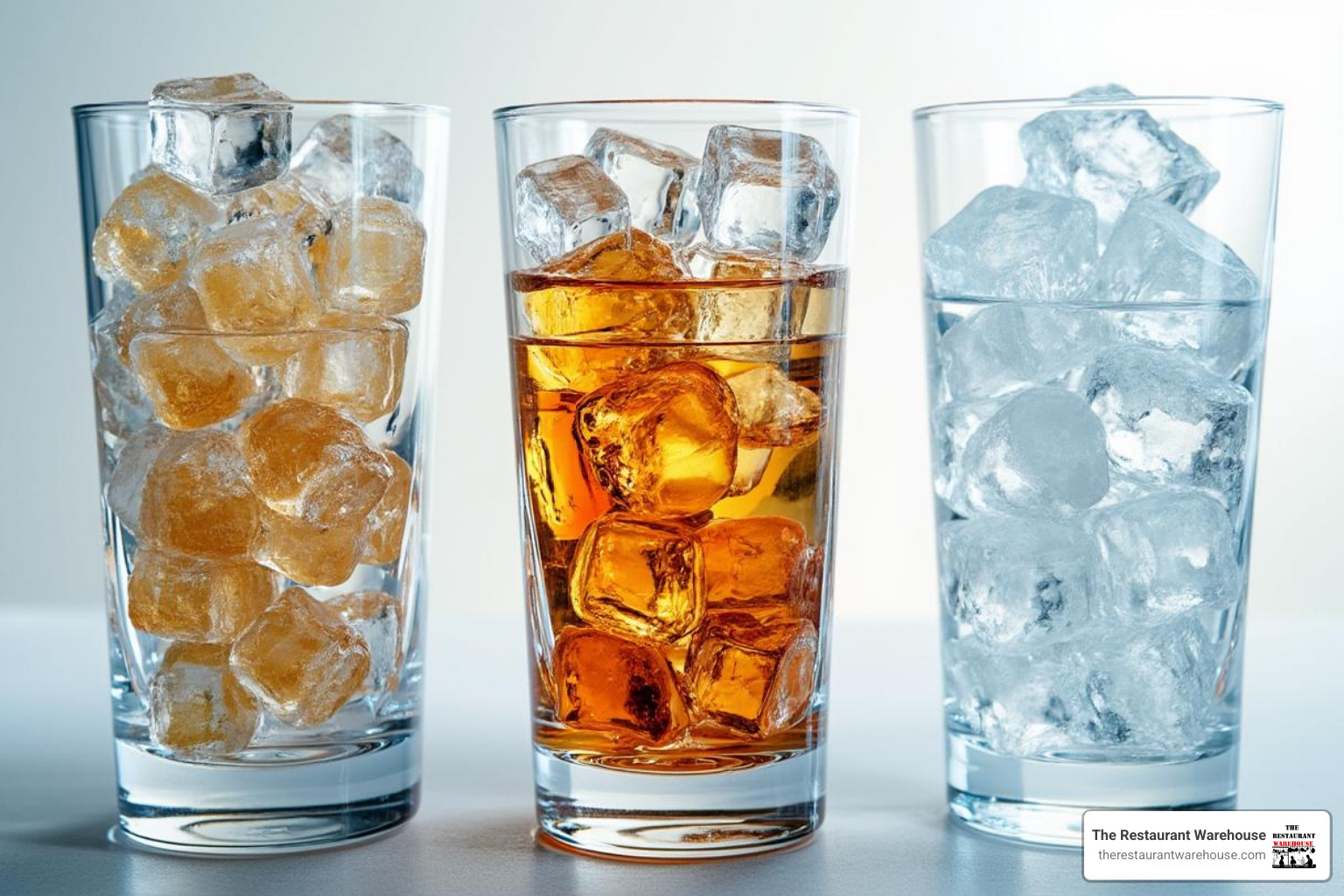
First up, there's Nugget Ice. Many folks affectionately call this "the good ice." It's soft, chewable, and has a bit of a porous texture, almost like tiny snowballs packed together. Even though it's soft, its unique nature means it has a large surface area. This helps it cool your drinks super fast without watering them down too quickly. It's a definite favorite for blended drinks, sodas, or just for munching on!
Then we have Bullet Ice. This is the type you'll most often see from portable countertop ice makers. It's shaped like a cylinder with a hollow middle. Bullet ice is usually very quick to produce, which is great for on-demand needs. However, because of its shape and the air trapped inside, it tends to melt faster than other ice types. It's perfectly fine for everyday use, but just know your drink might get a little diluted sooner.
Finally, there's Clear Cube Ice (which can come in full or half-cube shapes). This is the champ when it comes to density and slow melting. It's made through a slower, more controlled freezing process, which means very few air bubbles get trapped inside. This makes the ice super solid and beautifully clear. Its low surface area and high density mean it melts very, very slowly, helping to keep your drinks, especially spirits and cocktails, tasting strong and true. Think of it as the "restaurant quality" ice you find in fancy spots!
Generally speaking, the denser and less porous the ice is, like those clear cubes, the slower it will melt. Those tiny air bubbles you sometimes see in ice actually lower its density and make it melt faster. So, if you want a drink that stays perfectly strong and cold for longer, clear cube ice is often your best bet.
Practical Features You Shouldn't Overlook
Once you've decided an ice maker that keeps ice frozen is the way to go, there are a few other practical features that will really shape your day-to-day experience.
First, always think about Size and Footprint. Whether you're looking at a sleek undercounter unit or a big high-capacity machine, grab your measuring tape! Don't just check the width and depth, but also the height. This is extra important if it needs to slide under a counter or if there are cabinets above it. For undercounter models, make sure there’s enough room for good airflow, especially if it's air-cooled, and for opening any doors or access panels for maintenance.
Next, consider the Noise Level (dB). Ice makers, especially those with powerful compressors, will make some noise. This can range from a soft hum to a more noticeable whirring or the sound of ice dropping into the bin. If your unit will be in a quiet spot, like a kitchen that opens right into your living room, definitely check the decibel (dB) rating in the product specs. Some models are built to be much quieter than others.
A fantastic feature to look for is a Self-Cleaning Function. This is a real game-changer! Because ice makers deal with water, they can sometimes become a home for bacteria, mold, or mineral buildup. A self-cleaning cycle takes care of a lot of this for you, flushing out the system. Even with this feature, though, regular manual cleaning and descaling are still super important. And here's a pro tip: using filtered water can really cut down on mineral buildup and make your ice taste even better!
Think about your Water Source (Manual Fill vs. Direct Line). Most basic countertop units need you to manually fill a reservoir. But here's the beauty of undercounter and high-capacity ice maker that keeps ice frozen units: they almost always connect directly to your home's water line. This is a huge convenience, as you'll never have to worry about refilling a tank again – you'll have a continuous supply of water for ice.
Don't forget about Maintenance either. Beyond just cleaning, how easy is it to keep the machine running smoothly? Can filters be easily swapped out? Are the parts accessible if something needs servicing? Commercial ice makers are built tough and often last around 10 years, while home models might last 4-5 years. So, thinking about how easy it is to maintain can really extend the life of your investment.
Finally, always put Safety first. It’s smart to be aware of any potential hazards. For instance, some countertop nugget ice makers have actually been recalled in the past due to safety concerns. We always suggest regularly checking for safety recalls for any appliance you own or are thinking about buying.
Frequently Asked Questions about Ice Makers with Freezers
We hear a lot of questions from folks trying to find the perfect ice maker. It can be tricky, especially when you're dreaming of perfectly solid ice that doesn't melt away. So, let's tackle some of the most common questions, focusing on how to find an ice maker that keeps ice frozen.
Are there any countertop ice makers that keep ice frozen?
This is probably the question we get asked the most, and honestly, it's a bit of a tricky one. The short answer is: very, very few, and usually with some big trade-offs. Most countertop ice makers are built to make ice super fast, not to store it for a long time. Think about it: keeping ice frozen solid means getting temperatures well below freezing, like in your home freezer. Doing that in a small, portable appliance that also creates heat when it's making ice is a huge challenge for engineers, and it makes the machine expensive to build.
While you might come across a rare "hybrid" model or a specialized portable freezer that claims to keep a little bit of ice frozen, they typically won't perform like a true freezer. They just don't have the same cooling power or insulation. If your main goal is to have truly frozen ice ready whenever you need it, the most reliable solutions are almost always larger, dedicated units. We're talking about undercounter models or the high-capacity machines you see in restaurants. These big brothers of the ice maker world have the proper refrigeration systems, thick insulation, and power needed to keep ice perfectly solid, well below its melting point. So, if you're serious about ice that stays frozen, we usually suggest looking beyond the standard countertop options.
How do you stop ice from clumping in an ice maker?
Ah, the dreaded ice clump! If you've ever reached into your ice maker bin only to pull out a giant block of ice instead of individual cubes, you know this frustration. Ice clumping is a clear sign that your ice isn't staying cold enough. What happens is the surface of the ice melts a little, then it refreezes, fusing all those individual cubes into one big chunk. This is a super common issue with those countertop ice makers because their bins aren't actively refrigerated. Plus, the ice they make is a bit "warmer" (around 27 degrees Fahrenheit) compared to the bone-chilling 0 degrees Fahrenheit ice from your home freezer.
The absolute best way to stop clumping is to use an ice maker that keeps ice frozen – one with a true freezer compartment. This kind of machine keeps the ice well below its melting point, ensuring it stays dry, separate, and ready to scoop.
Now, if you're using a standard countertop machine and want to prevent clumping, your best bet is to transfer the ice to your main freezer as soon as it's made. To help keep it from clumping even there, here are a few tricks:
- Freeze in batches: Let the ice freeze solid in your main freezer on a tray or spread out before you combine it into a larger bag or container. This ensures each cube is properly frozen before they meet.
- Give the bag a good bang: If you do end up with a clump in your freezer bag, a common trick (especially in busy kitchens!) is to simply drop or bang the bag of ice on a hard surface. It usually breaks right apart.
- Use it quickly: Honestly, the simplest solution for ice made by a standard countertop unit is to just use it soon after it's produced! Don't let it sit around too long in the machine's bin.
How much does a true freezing ice maker cost?
Let's talk about the price tag, because there's a pretty big difference between a basic countertop ice maker and an ice maker that keeps ice frozen with a built-in freezer.
You can typically find standard countertop ice makers for anywhere from $100 to $400. If you're looking for those popular nugget ice makers, like the GE Profile Opal 2.0, they'll usually be on the higher end of that range.
Stepping up to undercounter ice makers with refrigerated bins is a bigger leap. These units usually start around $1,500 and can easily go up to $4,000 or even more. The price depends on the brand, how much ice it can make, and fancy features like clear ice technology or smart connectivity. Don't forget to factor in installation costs for these too, as they often need professional help for plumbing, electrical work, and drainage.
Then, at the top tier, you have the high-capacity commercial ice machines (often with separate refrigerated bins). These are a serious investment. The part that actually makes the ice (the "head") can range from $2,000 to over $10,000. And then you'll need a separate refrigerated storage bin, which can add another $500 to $3,000 or more to the total. Installation for these can be quite complex and costly as well.
While the initial cost might seem high, the long-term value of a true freezing ice maker is huge, especially if you go through a lot of ice at home or run a business. You'll save money on buying bagged ice, you'll always have consistent, high-quality ice, and you'll have a reliable supply that won't melt away. That's why we at The Restaurant Warehouse focus on providing these high-value solutions at wholesale pricing, helping you avoid those high commissions and retail markups you might find elsewhere. We believe everyone deserves access to great equipment without breaking the bank!
Conclusion: The Best Choice for Truly Frozen Ice
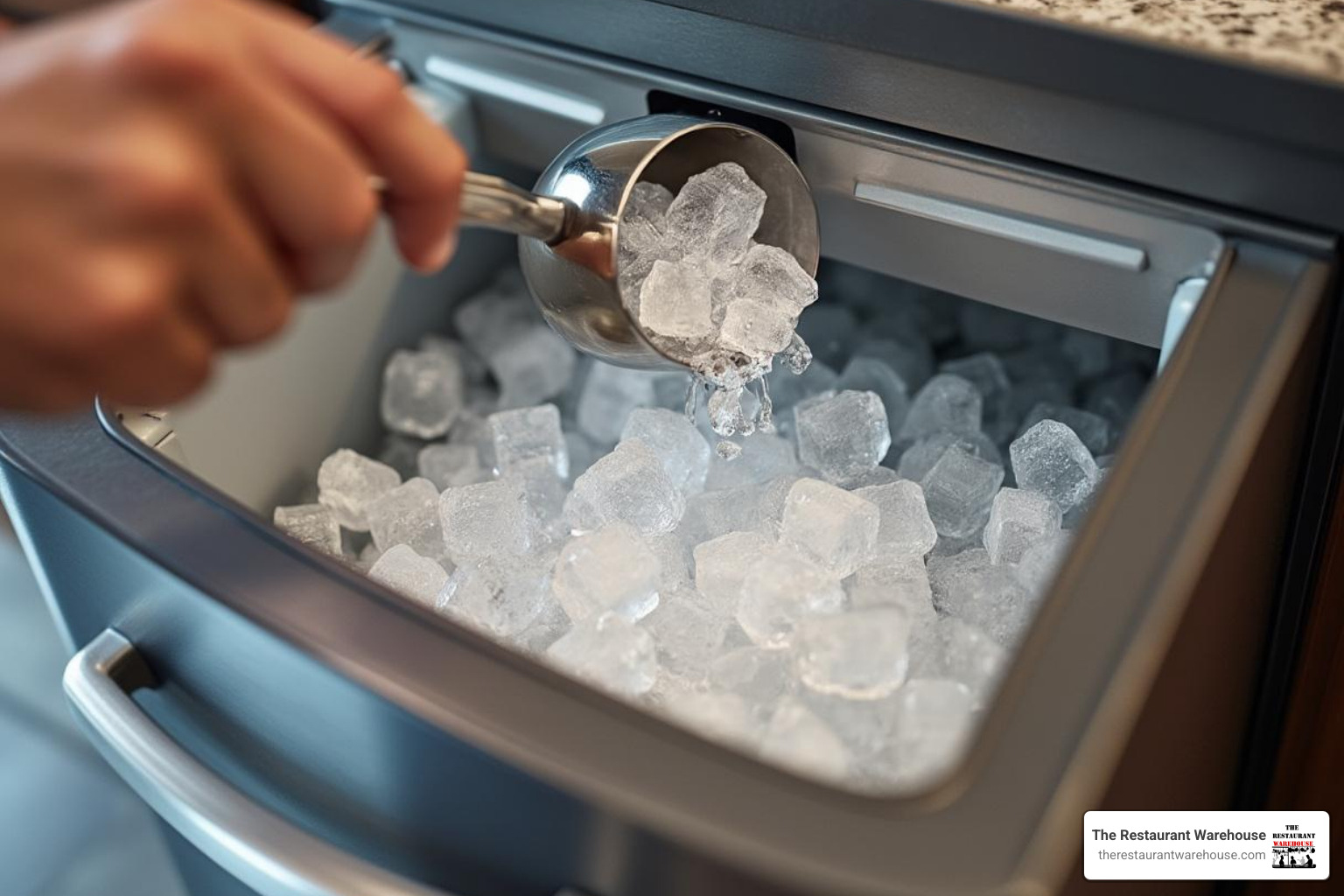
We've all been there: the excitement of fresh ice turning into a sad, slushy puddle. Your quest for an ice maker that keeps ice frozen likely began with that very frustration. While those handy portable countertop machines are fantastic for whipping up ice in a hurry, they simply aren't built for keeping it solid over time. Their clever design, with insulated bins and meltwater recycling, is perfect for continuous production, but it just doesn't cut it when you need ice that stays hard, dry, and ready for days on end.
So, if you're truly tired of the ice melting game, here's the good news: there's a solution. For a constant supply of hard, perfectly solid ice that won't melt or clump, the clear winners are undercounter and high-capacity commercial ice makers. These aren't just insulated boxes; they feature integrated freezers. This means they offer true refrigeration, keeping your ice at sub-zero temperatures, just like the ice in your main freezer.
Choosing one of these robust machines is a smart move. It's a long-term investment in pure convenience, top-notch quality, and unbeatable reliability. Say goodbye to the endless meltdown cycle for good! Whether you're running a busy household or a thriving business, these dedicated solutions ensure you'll always have the perfectly frozen ice you need, exactly when you need it.
Ready to explore your options for truly frozen ice? Check out our wide selection of commercial-grade solutions and end your ice woes today. You can find more information about our commercial ice machines and find the perfect fit for your needs.
About The Author

Sean Kearney
Sean Kearney used to work at Amazon.com and started The Restaurant Warehouse. He has more than 10 years of experience in restaurant equipment and supplies. He graduated from the University of Washington in 1993. He earned a BA in business and marketing. He also played linebacker for the Huskies football team. He helps restaurants find equipment at a fair price and offers financing options. You can connect with Sean on LinkedIn or Facebook.
Leave a comment