

How to Improve Restaurant Operations: Essential Tips & Strategies
Running a successful restaurant is all about operational excellence. Let's be honest, it's not just about the food. To truly improve your operations, you have to look at the whole picture—marrying smart technology with a well-trained team and keeping a tight grip on your finances. Real, lasting improvement comes from seeing how everything connects, from the heat of the kitchen line to the smile at the front door and the numbers in your back office.
The Blueprint for Modern Restaurant Operations
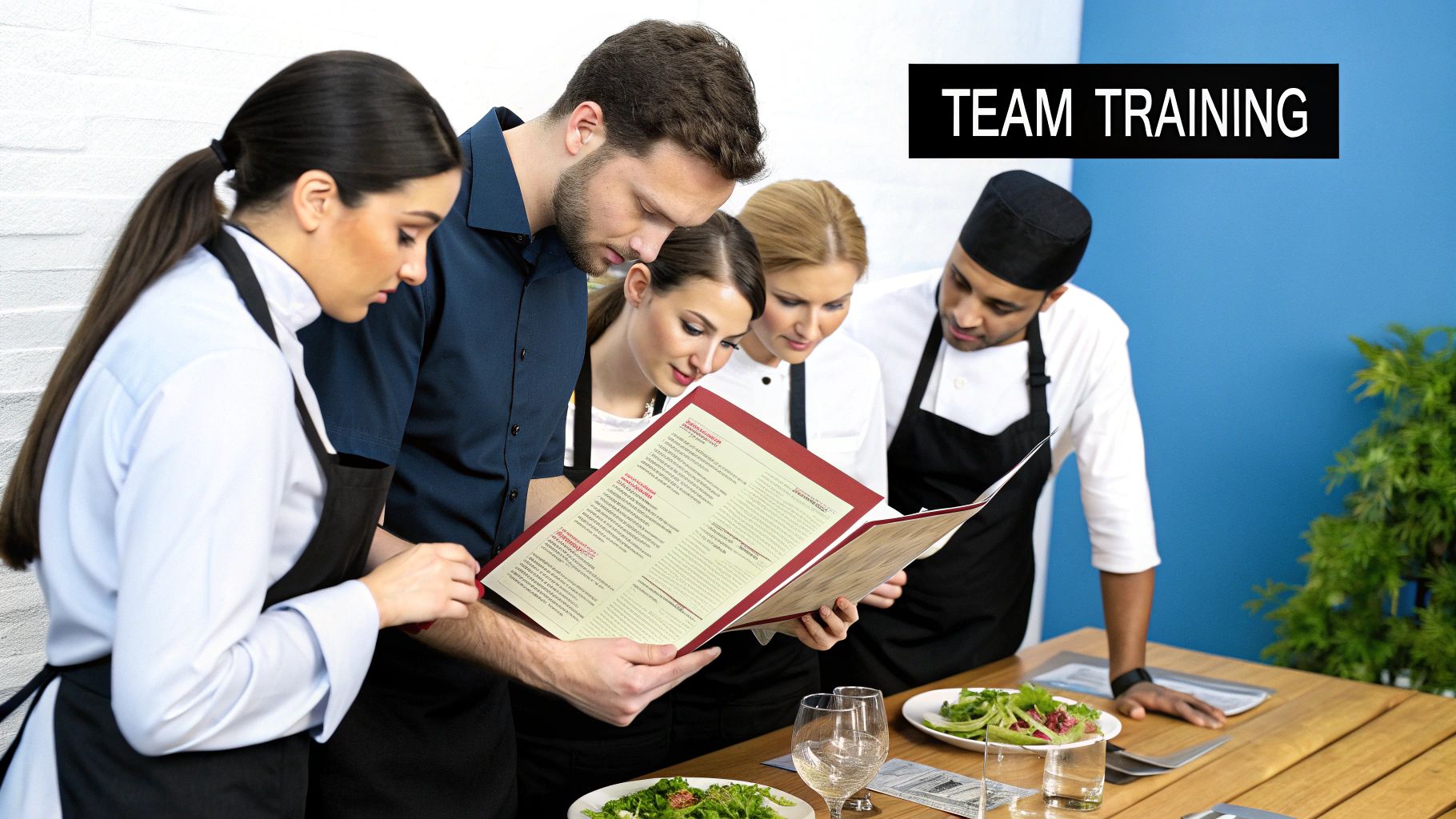
Forget about slapping on temporary fixes that only get you through the week. Building a strategic blueprint for your restaurant's operations is what separates the businesses that thrive from those that just survive. This isn't about making a few isolated tweaks; it's about deeply understanding how every single part of your business works together.
At its core, this blueprint is built on recognizing that everything is connected. Nail your inventory management, and you'll see a direct impact on your financial health. A well-trained, happy team? That translates directly into a better customer experience.
Each piece of the puzzle influences the others. Small gains in one area can create massive, positive ripples across your entire operation.
Key Pillars of an Operational Blueprint
To start sketching out your own framework, zoom in on these foundational areas. Think of each one as a critical opportunity to boost efficiency and drive real growth.
- Financial Controls: This is way more than just counting cash at the end of the night. It means actively managing your Cost of Goods Sold (CoGS), keeping labor costs in check, and obsessing over the key performance indicators that actually determine your profitability.
- Team Optimization: Your staff is the engine of your restaurant. Period. Solid training, clear communication, and fair scheduling aren't just "nice-to-haves"—they're non-negotiable for cutting down on turnover and delivering consistent, top-notch service.
- Technology Integration: From a modern Point of Sale (POS) system that spits out invaluable sales data to a Kitchen Display System (KDS) that keeps the order flow smooth, technology should be your problem-solver, not another headache.
- Customer Experience: At the end of the day, every operational decision you make should be seen through your customers' eyes. Faster ticket times, accurate orders, and a seamless dining journey are the direct results of a well-oiled machine in the back-of-house.
A crucial, and often overlooked, part of any modern restaurant blueprint is a solid business continuity plan. Knowing the five steps for creating a business continuity plan can be a lifesaver when you're hit with anything from a power outage to a major supply chain hiccup.
To help you build a stronger, more resilient restaurant, we've pulled together a quick summary of these core operational pillars. Focusing on these areas is the fastest way to see meaningful improvement.
Key Pillars of Restaurant Operational Improvement
| Operational Pillar | Primary Goal | Key Outcome |
|---|---|---|
| Financial Controls | Maximize profitability by closely managing costs and revenue. | Improved profit margins and better cash flow. |
| Team Optimization | Build a skilled, motivated, and efficient workforce. | Lower staff turnover and consistently high service quality. |
| Technology Integration | Implement tools that streamline workflows and provide actionable data. | Increased efficiency, reduced errors, and smarter decision-making. |
| Customer Experience | Ensure every guest interaction is positive, seamless, and memorable. | Higher customer satisfaction, loyalty, and repeat business. |
This guide is designed to give you practical, actionable insights for each of these pillars. In the sections that follow, we'll dive deep into specific strategies for mastering your inventory, using technology to your advantage, and building a team that will drive your success.
Get a Grip on Your Inventory and Supply Chain
Your inventory is the engine of your restaurant, but it's also where your profits can quietly leak away. If you want to really improve how your restaurant operates, you have to nail down how you manage stock and supplies. This is about moving from a frantic, "what do we need today?" approach to a smart, proactive strategy that plugs financial holes and beefs up your bottom line.
This isn't just about counting boxes in the walk-in. It's about building a solid system that drastically cuts food waste, makes sure you never 86 a signature dish during a Saturday night rush, and gives you a perfectly clear view of your costs.
Live and Breathe the FIFO Principle
One of the simplest yet most effective inventory methods out there is First-In, First-Out (FIFO). The idea couldn't be easier: the first ingredients that arrive in your kitchen should be the very first ones you use. This simple habit is your single best defense against spoilage and waste.
But for FIFO to work, it has to be a team-wide discipline, not just something the manager worries about.
- Label Everything. No Exceptions: As soon as a new delivery comes through the door, every single item gets a label with the delivery date. Use a clear, consistent system everyone gets.
- Organize for Success: Train your team to always place new stock behind the older stock in the walk-in, freezers, and dry storage. This simple physical arrangement makes it second nature for cooks to grab the right item first.
A flawlessly run FIFO system means you're always using ingredients when they're at their best. That saves money and makes your food taste better.
Rethink Your Inventory Counts
That traditional, once-a-month, all-hands-on-deck inventory count? It’s slow, painful, and usually inaccurate by the time you're done. A much smarter way to work is to do smaller, more frequent checks, a technique known as cycle counting.
Instead of one huge audit, you might count dairy and produce twice a week, proteins weekly, and dry goods every two weeks. This gives you a much more accurate, real-time snapshot of your stock levels. It also helps you spot problems like theft, over-portioning, or supplier shorts way before they blow up into major issues.
By making these checks smaller and more regular, you turn a dreaded chore into a manageable routine. This consistency is the key to staying in control and making purchasing decisions based on what you have right now, not what you had weeks ago.
Let Your POS Data Do the Heavy Lifting
Your Point of Sale (POS) system is sitting on a goldmine of data that can completely change how you manage inventory. It tells you exactly what’s flying out of the kitchen and what’s gathering dust, letting you shift from guesswork to data-driven ordering.
Dive into those sales reports. Pinpoint your bestsellers and your slow-movers. If a particular menu item just isn't selling, you're tying up cash and cooler space on ingredients that are probably heading for the trash. Use this intel to:
- Fine-Tune Your Menu: Think about re-engineering unpopular dishes or just getting rid of them.
- Adjust Order Sizes: If you know steak sales always dip on Tuesdays, order less steak for that day. It's that simple.
- Plan for the Rush: Use your past sales data to accurately predict demand for holidays, festivals, or local events. This way, you're perfectly stocked without being overstocked.
This data-first approach is a massive part of overall restaurant efficiency and has a direct line to your profitability. You can learn more about making your whole operation run smoother in our guide to improving restaurant efficiency.
Treat Your Suppliers Like Partners
Your suppliers are more than just vendors who drop off boxes; they are partners in your success. Building strong, transparent relationships can lead to better pricing, more reliable deliveries, and higher-quality products.
Don't ever be afraid to negotiate terms, but always remember that a good relationship is a two-way street. Pay your invoices on time, and be clear and upfront about your needs. A reliable supplier who gets your business is an invaluable asset who can help you handle supply chain hiccups and keep your kitchen humming.
Never underestimate how much disciplined inventory management impacts your financial health. As the global foodservice market grows, the average profit margin in this industry stays razor-thin, often hovering between just 3% to 5%. Getting your inventory under control is one of the most direct ways to protect and grow that margin by slashing waste and making every dollar you spend on food count. For a closer look, check out these detailed restaurant industry statistics.
Integrating Technology to Streamline Workflows
In today's restaurant world, technology isn't just a nice-to-have; it's the silent partner working behind the scenes to keep things running smoothly. When you’re wondering how to improve restaurant operations, strategically adding the right tools is often the most powerful answer. It's about solving real-world bottlenecks, cutting down on staff stress, and delivering that consistent experience that keeps people coming back.
The trick is to stop thinking of tech as a complicated expense and start seeing it as a problem-solver. Is your bistro struggling with no-shows? A simple reservation system with automated reminders can make a huge difference. Is your busy cafe plagued by order errors? Switching from paper tickets to a modern Point of Sale (POS) system that talks directly to the kitchen can slash mistakes. It’s all about matching the tool to the specific challenge you're facing.
The Modern POS as Your Command Center
Your Point of Sale system should be doing a lot more than just taking payments. A modern, cloud-based POS acts as the central nervous system for your entire restaurant. It’s constantly collecting valuable data that helps you make smarter, more profitable decisions. It tracks every single sale, giving you a real-time picture of your most popular dishes, your busiest hours, and even how individual servers are performing.
This data is pure gold. By digging into your sales trends, you can fine-tune your inventory orders so you're not over- or under-stocking. You can build more effective staff schedules and even spot those menu items that just aren't pulling their weight. The goal is to get away from guesswork and start making choices based on what your customers are actually buying.
A great POS system tells you a story about your business. It reveals that your lunch rush is busiest between 12:15 PM and 1:30 PM, not just "around noon," allowing for precision scheduling that cuts down on unnecessary labor costs.
Revolutionize Your Kitchen with a KDS
The kitchen is the heart of your restaurant, and when there's chaos back there, it ripples through the entire dining experience. A Kitchen Display System (KDS) is one of the most effective ways to bring calm and order to the back of house. It completely replaces those messy, easily lost paper tickets with a clear, digital screen that shows every incoming order.
Here’s how a KDS directly improves your day-to-day operations:
- Boosts Order Accuracy: Digital tickets are crystal clear and legible, which gets rid of errors caused by messy handwriting.
- Speeds Up Ticket Times: The system tracks how long each order has been active, helping cooks prioritize and ensuring food gets out of the kitchen faster.
- Improves Communication: A KDS creates a direct, silent link between the front of house and the kitchen, cutting down on the need for shouting across the pass.
This isn't just a tool for big chains. A KDS can bring massive efficiency gains to any kitchen, helping create a calmer, more productive environment. The physical design of your kitchen plays a huge role in how effective these systems can be; for some great ideas, you can explore various restaurant kitchen layout examples that are built for optimal workflow.
This image highlights how a smart kitchen, powered by the right tech, can become the backbone of your operational strategy.
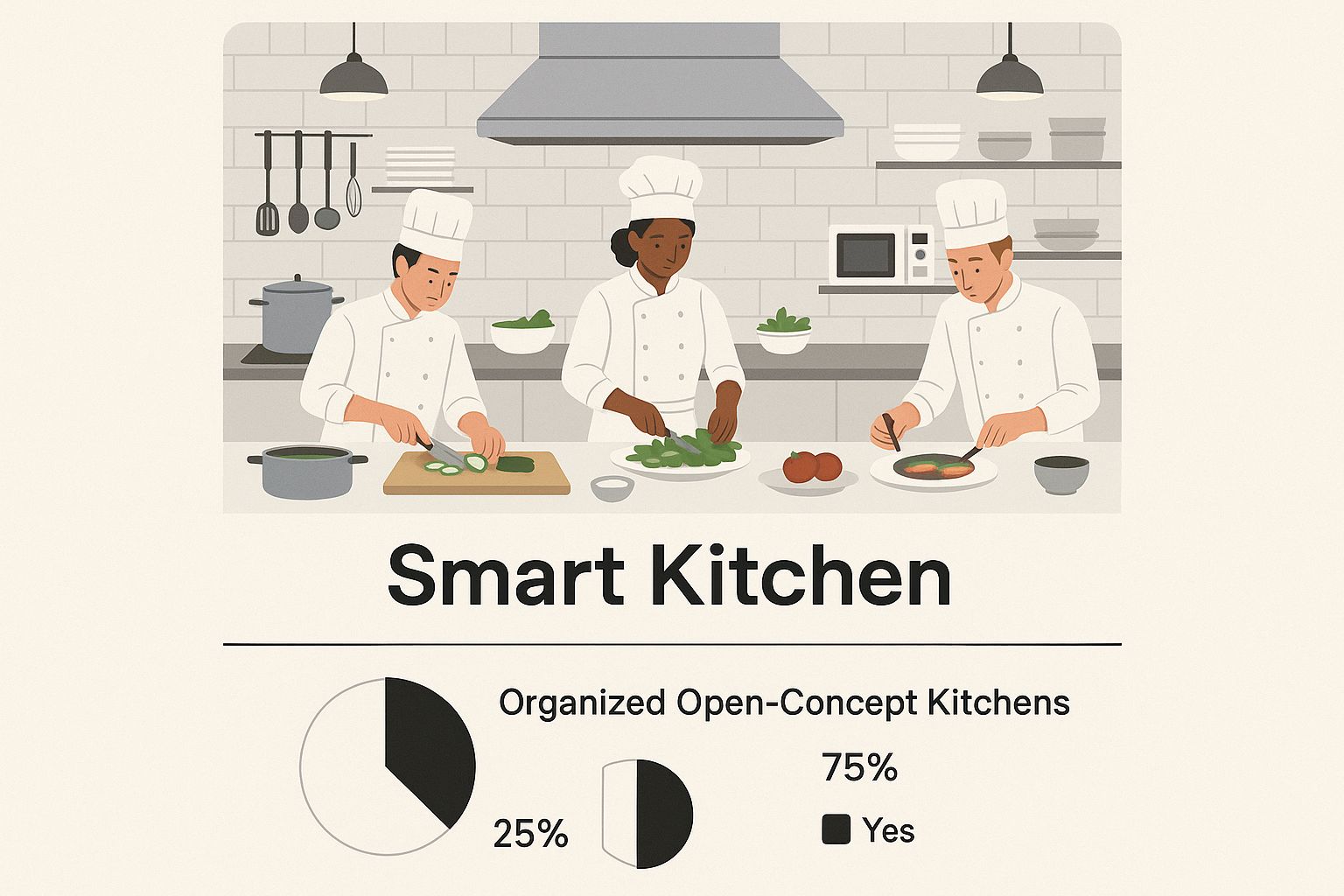
As you can see, a 'Smart Kitchen' isn’t about flashy gadgets. It's about creating an organized, data-driven environment where technology supports human skill.
Beyond the Basics: Other Essential Tech
While a POS and KDS are foundational, other tools can solve different operational headaches. Think about tools that can make a real, tangible difference in your workflow:
- Reservation and Waitlist Platforms: These systems are brilliant for optimizing table turnover. They manage bookings, cut down on no-shows with automated reminders, and give guests an accurate idea of their wait time.
- Scheduling Software: Modern scheduling apps take the pain out of creating balanced schedules. They make it easier to handle time-off requests and communicate with your team, which frees up managers' time and gives staff more control.
- Inventory Management Tools: A good POS can handle basic inventory, but dedicated software offers much deeper insights. It can track ingredients down to the gram and even automate purchase orders when you're running low on something.
The right combination of technology depends entirely on your restaurant's unique needs. To help you figure out what might work for you, here’s a quick breakdown of some common tools and their main benefits.
Essential Restaurant Tech Comparison
Making sense of all the available technology can be a challenge. This table breaks down some of the most impactful tools to help you decide where to invest for the biggest operational payoff.
| Technology Type | Primary Function | Best For | Key Benefit |
|---|---|---|---|
| Cloud-Based POS | Centralize sales, inventory, and customer data. | All restaurant types. | Provides actionable data for smarter decision-making. |
| Kitchen Display System (KDS) | Digitize and streamline the order fulfillment process. | High-volume kitchens. | Increases order accuracy and reduces ticket times. |
| Reservation Software | Manage bookings, waitlists, and table turnover. | Full-service dining. | Maximizes seating capacity and improves guest flow. |
| Employee Scheduling App | Simplify staff scheduling and communication. | Restaurants of any size. | Reduces labor costs and improves staff satisfaction. |
Ultimately, technology should feel like an extension of your team—a reliable tool that handles the repetitive tasks, provides clear data, and frees up your staff to focus on what they do best: creating an incredible experience for your guests.
Optimizing Staffing and Building a Winning Team
You can have the slickest tech and the most dialed-in workflows, but at the end of the day, the real heart of your restaurant is its people. Your team is, without a doubt, your most valuable asset. How you find, train, and support them is a massive piece of the puzzle when you're figuring out how to improve restaurant operations.
A happy, well-trained crew isn't just a nice-to-have; they're the engine that powers consistency, keeps guests coming back, and ultimately, drives your profitability. This isn't just about plugging holes in the schedule. It’s about building a tight-knit team where everyone feels valued, knows their role inside and out, and is empowered to do their best work.
Creating Crystal-Clear Training Programs
Great service never happens by accident—it’s the direct result of great training. Throwing new hires onto the floor with a sink-or-swim attitude is a recipe for disaster. You’ll see more errors, inconsistent service, and a revolving door of staff. A standardized, well-documented training program is your best defense.
Your program needs to cover everything, leaving no room for guesswork.
- Role-Specific Checklists: Build out detailed checklists for every single position, from the host stand to the dish pit. What are the opening duties? Closing tasks? Side work? Service standards? Spell it all out.
- Shadowing and Mentorship: Nothing beats hands-on experience. Pair new folks with your seasoned, high-performing team members. It’s way more effective than just handing them a manual and wishing them luck.
- Cross-Training: This is a game-changer. Teach your servers the basics of the line, and teach your cooks the basics of the floor. It builds a ton of empathy and helps the whole operation run smoother when you're in the weeds.
A solid training foundation gives your people the confidence to handle whatever a busy shift throws at them, cutting down on the stress that leads to burnout.
Smart Scheduling for a Happier Team
Bad scheduling will crush team morale faster than almost anything else. If you're constantly understaffed, your team will be exhausted and overwhelmed. Overstaff, and you're just burning through your labor budget. Modern scheduling is a balancing act between the needs of the business and the well-being of your staff.
Don't just schedule for coverage; schedule for success. A well-rested, focused team will always outperform a burnt-out one, even with fewer people on the floor. It’s about having the right people, not just more people.
Dive into your POS data to pinpoint your actual busy periods—down to the hour—and build your schedule around that. But don't forget to offer some flexibility. Using scheduling software that lets employees easily swap shifts or pick up hours gives them a sense of control over their lives, which is huge for retention.
Labor management is a constant battle in this industry. To make things trickier, recent data shows tipping rates have been declining due to shifts in consumer confidence. This puts direct financial pressure on your staff and can speed up turnover, making your retention strategies more critical than ever. You can dig into these trends in this summer restaurant industry report.
Cultivating a Culture of Value and Growth
A positive work culture is your secret weapon against turnover. It's that feeling that makes your restaurant a place where people want to work, not just a place they have to be. You build this culture through small, consistent actions every single day.
It starts with your pre-shift meetings. These five-minute huddles aren't just for rattling off the specials. Use them to:
- Set the Tone: Kick things off with positive energy. Get everyone on the same page about the goals for the shift.
- Celebrate Wins: Did someone get a great review or handle a tough situation perfectly yesterday? Shout them out.
- Share Information: Quickly cover menu changes, 86'd items, or any big reservations coming in.
- Listen: Make space for your team to ask a quick question or voice a concern.
Beyond the daily huddle, create an environment where feedback is welcome. Encourage your team to bring you ideas—they’re on the front lines, and they often spot operational hiccups before you do. When people feel heard, they feel invested.
Finally, show them there's a future. Lay out clear paths for growth, whether it's moving from server to shift lead or from prep cook to sous chef. When your team sees a chance to advance, they're far more likely to stick around and turn a job into a career.
Enhancing the Customer Experience Through Operations
Excellent restaurant operations are often invisible to your guests, but their effects are felt in every single moment of the dining experience. When you dial in your operations, you’re not just making life easier for your staff; you're directly crafting a better, smoother, and more memorable visit for every customer who walks through your door.
The real magic happens when your back-of-house efficiency translates seamlessly into front-of-house success. Every operational decision you make should ultimately be viewed through the lens of the customer. A perfectly organized kitchen isn't just about internal metrics; it’s about getting hot, delicious food to the table faster. That right there can be the deciding factor between a one-time visitor and a lifelong regular.
Connecting Kitchen Speed to Table Satisfaction
The journey from a customer's order to their first bite is a make-or-break moment. A disorganized kitchen pass or a confusing ordering system creates delays that guests notice immediately. When the kitchen is humming along, ticket times drop, and food arrives exactly as it should—hot, fresh, and beautiful.
Think about the ripple effect here:
- Faster Ticket Times: An organized kitchen with clear communication means less time from when the order is placed to when it's delivered.
- Consistent Quality: Well-defined processes ensure that every dish meets your high standards, every single time.
- Higher Table Turnover: Efficient service allows you to serve more guests without ever making anyone feel rushed.
This connection between the back and front of the house is fundamental. If you're building your systems from the ground up, diving into a comprehensive opening a restaurant checklist can give you the structure you need to get it right from day one.
The Art of Flawless Table Management
Long, uncertain wait times are a major source of customer frustration. We've all been there. This is where efficient table management and crystal-clear communication between the host stand, servers, and kitchen become absolutely crucial. A host who can accurately quote wait times and a system that alerts servers when a table is ready creates a smooth, reassuring flow for your guests.
This isn't just about filling seats; it's about managing expectations and making your guests feel cared for from the second they arrive. Modern reservation and waitlist systems can automate a lot of this, but the human element of communication is still king. A quick huddle before service to discuss large parties or special requests can prevent massive headaches later.
"The best operations make guests feel like everything is effortless. They don't see the hard work behind the scenes; they just feel the positive results—prompt service, accurate orders, and a relaxed atmosphere."
Turning Feedback into Actionable Improvements
Your customers are constantly giving you a free, real-time audit of your operations. Every online review, social media comment, and in-person remark is a piece of data you can use to get better. Don't just read the feedback; create a system for it.
Look for patterns. Are multiple reviews mentioning long waits for drinks? That could signal a bottleneck at the bar. Is a specific dish consistently described as "lukewarm"? That's a direct signal to examine your kitchen-to-table workflow.
Acting on this feedback shows customers you’re listening and are committed to excellence. It's also worth looking at the end of the meal—offering diverse and seamless flexible payment methods can significantly improve convenience and end the dining experience on a high note.
Getting a Grip on Your Financial Health and Performance
You can't fix what you don't know is broken. To really take control of your restaurant, you have to look past the top-line revenue and dig into the numbers that tell the real story of your business's health. These key performance indicators (KPIs) are your dashboard—they show you where you’re winning and flash warning signs before small problems become disasters.
When you track these metrics consistently, managing your finances stops being a reactive headache and becomes a proactive strategy. It empowers you to make sharp, data-backed decisions on everything from menu pricing to staff schedules, ultimately steering your restaurant toward healthier, more sustainable profits.
The Metrics That Truly Matter
While you could track dozens of different data points, a few core metrics give you the clearest picture of your restaurant's financial stability and operational muscle. Getting these dialed in is non-negotiable.
- Cost of Goods Sold (CoGS): This is the total cost of all the ingredients you used for the food and drinks you sold in a given period. If your CoGS starts creeping up, it’s a red flag. It could mean anything from your suppliers hiking prices to inefficient portioning in the kitchen—or even theft.
- Labor Cost Percentage: This number shows you exactly what slice of your revenue is going toward paying your team. Keeping a close watch on it helps you build smarter schedules that match your busiest and slowest times, so you're not burning cash on overstaffing or hurting service by being shorthanded.
- Prime Cost: This is arguably the most critical number for any restaurant operator. It’s simply your CoGS plus your total labor costs. Your prime cost bundles your two biggest expenses together, giving you a powerful, at-a-glance view of how efficiently your restaurant is running.
For most successful restaurants, the sweet spot for prime cost is 60% or less of total sales. If your number is consistently higher than that, it’s a clear signal to start digging into your food and labor spending right away.
Turning Data into Smarter Decisions
Once you get into a rhythm of tracking these KPIs—whether it's daily, weekly, or monthly—you'll start to see trends and can begin asking the right questions. For example, if your CoGS suddenly jumps 3% one month, it’s time to play detective. Did your produce supplier raise their prices without telling you? Are your line cooks getting a little too generous with their portions? The data doesn’t give you the answer, but it tells you exactly where to start looking.
This data-first mindset is the secret to truly improving your restaurant's operations. It takes the guesswork and emotion out of your biggest decisions and replaces them with cold, hard facts. By building a routine around tracking and analyzing your performance, you give yourself the tools you need to spot weaknesses, double down on what’s working, and make sure your restaurant doesn't just survive, but thrives.
Common Questions About Fine-Tuning Restaurant Operations
Running a restaurant means wearing a dozen different hats, and it’s natural to have questions about making things run smoother. I hear the same operational challenges come up time and again from owners. Let's tackle a few of the most practical ones.
Where Do I Even Start to Improve My Operations?
Before you change anything, you need a clear picture of what’s actually happening. My advice is always the same: start with a focused, one-week audit.
Don't try to fix everything at once. Just observe and track your biggest headaches. Is it the ticket times? The amount of food waste at the end of the night? Maybe it's the constant line at the host stand. Whatever it is, gather real data on it. This will show you the single biggest bottleneck that’s costing you money and frustrating your team. Hit that one problem first, and you’ll see the biggest impact right away.
How Can I Make Improvements Without a Big Budget?
You don’t need a huge cash injection to see massive improvements. The best changes are often low-cost tweaks to your processes.
Start with your team. Sharpening up your training program costs you time, not money, but it drastically cuts down on errors. The same goes for inventory. Implementing a strict FIFO (First-In, First-Out) system is free, but it can save you thousands in food waste.
One of the most powerful, zero-cost tools is a simple five-minute pre-shift meeting. Getting the whole team aligned on specials, 86'd items, and big reservations prevents countless mistakes before the first guest even walks in.
These small, foundational habits create huge efficiencies without touching your bank account.
What Technology Gives the Best Bang for the Buck in a Small Restaurant?
For a small, independent restaurant, nothing beats the ROI of a modern, cloud-based Point of Sale (POS) system. Forget thinking of it as just a cash register. It's your command center.
A good POS gives you a goldmine of data. You’ll see exactly which dishes are selling and which are duds, when your busiest hours are, and even which servers are crushing it. That’s information you can immediately use to engineer a more profitable menu, build smarter staff schedules, and order inventory with precision. It’s one investment that directly fuels smarter decisions across the entire business.
Ready to equip your kitchen for peak efficiency? The Restaurant Warehouse offers everything from commercial refrigeration to cooking equipment, all at competitive prices. Get the tools you need with flexible financing and fast delivery by visiting https://therestaurantwarehouse.com today.
About The Author

Sean Kearney
Sean Kearney used to work at Amazon.com and started The Restaurant Warehouse. He has more than 10 years of experience in restaurant equipment and supplies. He graduated from the University of Washington in 1993. He earned a BA in business and marketing. He also played linebacker for the Huskies football team. He helps restaurants find equipment at a fair price and offers financing options. You can connect with Sean on LinkedIn or Facebook.
Leave a comment