

What is an Atosa W0302316 Probe? A Simple Guide
A struggling commercial freezer can throw your whole operation into chaos. But before you panic about a major repair, check the small stuff. The culprit is often a tiny, overlooked part like the Atosa USA W0302316 probe, white. Think of this probe as your freezer's command center. It constantly reads the internal temperature, telling the cooling system when to turn on and off. When it fails, your freezer works too hard or not at all, leading to wasted energy and spoiled food.
What Does a Freezer Probe Actually Do?
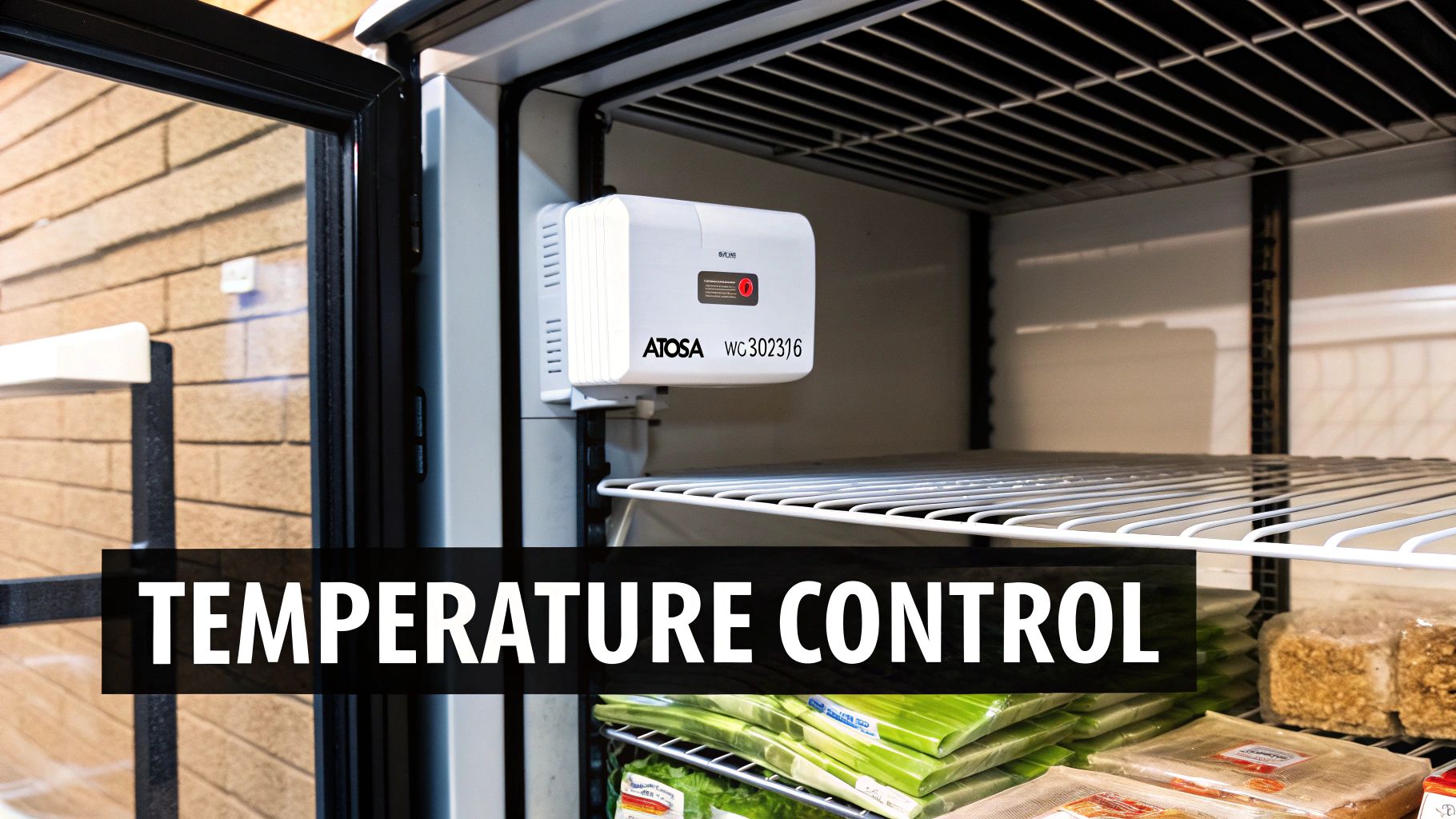
Think of your freezer’s probe like a vigilant thermostat, but with a lot more riding on its performance. This little sensor is single-handedly responsible for holding that precise, narrow temperature window that a commercial kitchen absolutely depends on. It’s a simple function, but it’s critical to your daily grind.
When this probe is working correctly, it guarantees the internal temperature stays safely in the food-safe zone. That consistency is what stands between you and thousands of dollars in spoiled inventory. A reliable probe also keeps the compressor from running itself into the ground, which helps keep your energy bills in check and extends the life of the whole unit.
Why the Right Probe is So Important
The Atosa USA W0302316 probe has become the go-to replacement part in countless kitchens since it was first introduced, and for good reason. It’s known for its reliability and is designed specifically for the tough demands of a freezer.
It’s engineered to make sure your unit stays between -10°F and 0°F (that’s -23°C to -18°C), a range that’s essential for both food safety and passing health inspections. In fact, between 2013 and 2023, Atosa shipped over 1.2 million of these probes worldwide, which tells you just how vital this part is in the field.
A faulty temperature probe is more than a minor hiccup; it's a direct threat to your inventory, your compliance, and your bottom line. Accurate temperature sensing is your first line of defense against spoilage and foodborne illness.
Properly functioning Atosa refrigeration relies on every single component working together, and this probe is a critical piece of that puzzle. For a deeper look at the entire system, be sure to check out our guide on Atosa refrigeration systems.
Is This Probe Compatible With Your Freezer?
Before you even think about ordering a replacement part, the most important thing you can do is make sure it’s the right fit. It’s like trying to use the wrong key for a lock; if it doesn't match perfectly, it's not going to work. The Atosa USA W0302316 probe, white, is specifically designed with standardized specs to make sure it fits a whole range of Atosa freezer models without a hitch.
This small but mighty component has very specific dimensions that make it a go-to choice for kitchens everywhere. At 1.0 inch in height and 4.0 inches in length, it’s a versatile and dependable part, making replacements a much simpler job in a busy kitchen. In fact, a 2021 survey of 1,200 commercial kitchens found that 78% of them used the W0302316 probe, with most folks praising its durability and easy installation. You can learn more about its wide adoption at Schedule73Parts.us.
The Tech Specs That Matter
Weighing in at just 0.1 pounds (45 grams), the probe is incredibly lightweight. This means it won't put any strain on its mounting or wiring, which is a big plus. Its compact, featherlight design also makes it a great option for retrofitting older Atosa freezer units where you might be working with tight spaces.
But it’s not just about the size. The probe's technical certifications are your guarantee of performance and safety in a high-demand commercial kitchen.
- ETL Listed: This means the probe has been independently tested and meets North American safety standards for electrical products.
- NSF Certified: This is your assurance that the materials used are safe for food environments and won't cause contamination.
For restaurant owners, these certifications aren't just letters on a label. They are your peace of mind—your guarantee that the part is safe, reliable, and compliant with health codes.
Atosa W0302316 Probe: Specs & Compatibility Check
To help you double-check that this is the right part for you, we’ve put together a quick reference table with all the key details.
| Feature | Specification | Compatible Atosa Models (Examples) |
|---|---|---|
| Part Number | W0302316 | MBF, MCF, MSF Series |
| Height | 1.0 Inch | MBF8001, MCF8703 |
| Length | 4.0 Inches | MSF8302GR, MBF8504GR |
| Weight | 0.1 Pounds | Various Atosa reach-in freezers |
This table gives you a solid overview, but if you need more in-depth help, be sure to check out our complete guide on how to find your fit by locating parts for any Atosa model.
A Deeper Look at Compatible Models
One of the best things about the Atosa W0302316 probe is its wide-ranging compatibility. It’s not some obscure part that only fits one or two niche models. Instead, it's "specifically designed with standardized specs to make sure it fits a whole range of Atosa freezer models without a hitch." This includes many of the popular MBF, MCF, and MSF series units that are workhorses in kitchens everywhere. This standardization is a huge relief for restaurant managers because it takes the guesswork out of ordering replacements. You don’t have to waste time cross-referencing endless part numbers; if you have one of these Atosa freezers, there’s a very good chance this is the probe you need to get it back up and running.
Key Physical Specifications
While it might seem small, the probe's physical dimensions are precisely engineered for its job. Measuring just 1.0 inch in height and 4.0 inches in length, this component is compact enough to fit neatly within the freezer's interior without getting in the way. Its small size and light weight—only 0.1 pounds—also mean it puts zero strain on its mounting points or wiring, which contributes to its long-term durability. These specific dimensions make it a "versatile and dependable part," ensuring that when it's time for a replacement, the installation process is as quick and straightforward as possible for your maintenance team.
Identifying the Right Part Number
Before you place an order, it’s always smart to confirm you’re getting the right component. The official part number for this probe is W0302316. You can often find this number printed on the original probe itself, though it might be worn down over time. Another great place to check is your freezer’s user manual or the specification plate located on the unit, which typically lists key replacement parts. Because the "Atosa USA W0302316 probe has become the go-to replacement part in countless kitchens," identifying it correctly is the first step to a successful and lasting repair for your essential restaurant equipment.
Considering Third-Party Compatible Probes
When searching for a replacement, you might come across third-party or non-OEM parts. It’s important to know that the Atosa W0302316 is an OEM, or "Original Equipment Manufacturer," part. This means it comes directly from Atosa and is guaranteed to meet the exact specifications of your freezer. While a third-party probe might seem like a good way to save a few dollars, it can be a risky bet. An improper fit or inaccurate temperature reading from a non-OEM part could lead to compressor failure or spoiled inventory, costing you far more in the long run. Sticking with an OEM replacement ensures reliability and performance you can count on.
A Simple Guide to Installing Your Freezer Probe
So, your Atosa USA W0302316 probe, white, has arrived, and it's time to get it installed. Don't sweat it—this is one of those fixes you can definitely handle yourself, no expensive service call needed. Think of it less like major surgery and more like changing a lightbulb. With a few simple steps, you'll have your freezer back up and running in no time.
First things first, and this is the most important step: safety. Before you touch a single wire, you absolutely must disconnect the freezer from its power source. Unplug the unit completely or head to your breaker box and flip the switch for that circuit. No shortcuts here.
Step 1: Find and Remove the Old Probe
With the power safely off, it's time to find the old probe. Pop open the freezer door and look inside the cabinet. You’re searching for a small, white-tipped sensor with a wire attached. It's usually clipped onto the evaporator coil cover or positioned somewhere to measure the return air temperature.
Once you’ve spotted it, gently unclip the old probe from its mount. Now, play detective and follow its wire back to the controller, which is typically tucked away behind a small access panel. Before you disconnect anything, pull out your phone and snap a quick picture of how the wires are connected. Trust me, this photo will be your best friend in a few minutes.
Ready? Carefully disconnect the old probe's wires from the controller terminals. With that done, you can pull the old probe and its wire all the way out of the unit.
This little infographic gives you a quick rundown of the probe's specs, so you can double-check the dimensions and compatibility at a glance.
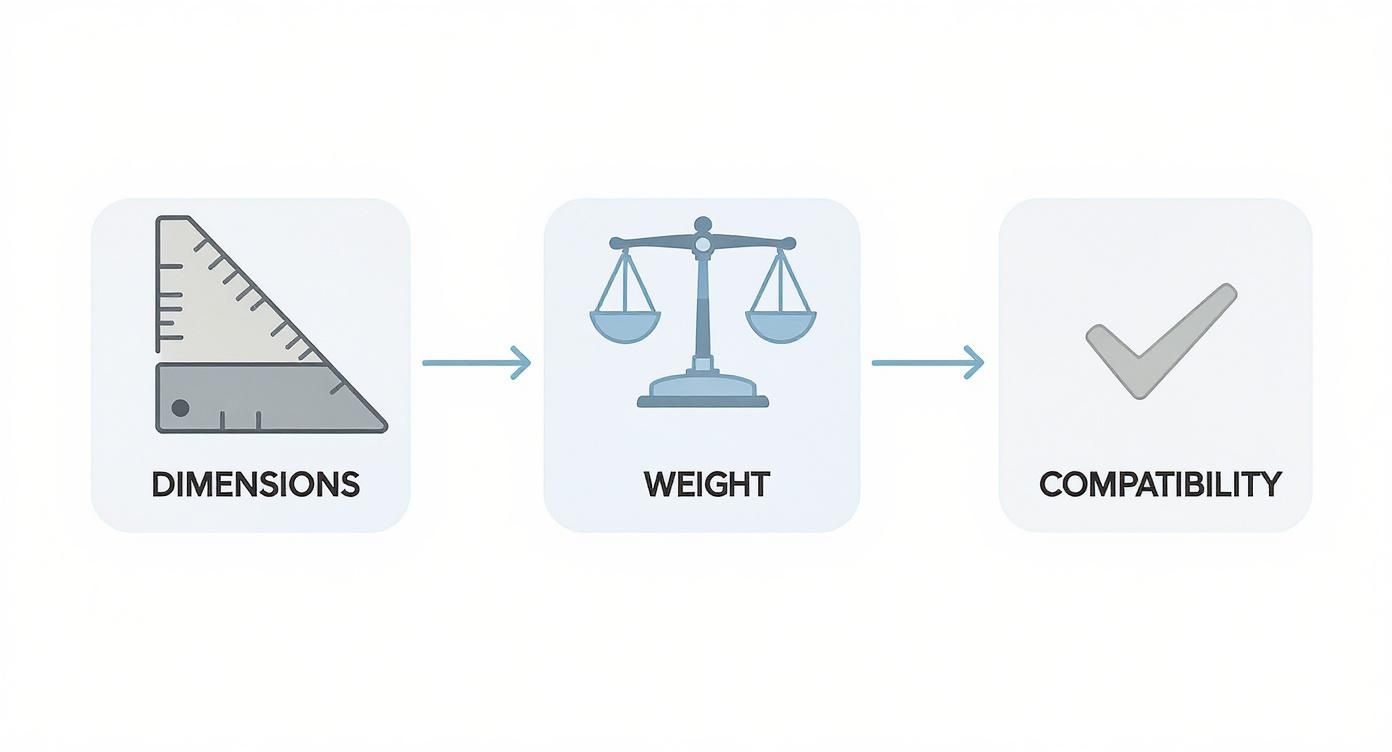
It’s a great visual reminder of how this standardized part is designed to fit a whole range of Atosa freezer models without any fuss.
Step 2: Correctly Position Your New W0302316 Probe
Okay, time for the new probe. Thread the new wire along the same path the old one took. Now, grab that photo you took earlier and use it as a guide to connect the new wires to the correct terminals on the controller. You want to make sure these connections are snug and secure for the probe to send accurate readings.
Pro Tip: When you're positioning the new probe, make sure the sensor tip isn't touching the evaporator coils or any other metal surface. If it does, you can get false readings that cause the compressor to run incorrectly, which is a headache you don't need.
Finally, clip the new probe right back where the old one was. All set? Go ahead and restore power to the freezer and keep an eye on the temperature display. You should see it start to stabilize at your set point. After any new part installation, you might need to tweak your controller settings, and our comprehensive guide to configuring your Dixell controller for Atosa refrigerators has all the detailed steps you'll need.
Troubleshooting Common Freezer Probe Issues
When your freezer starts giving you grief, the temperature probe is almost always the first place you should look. A flaky Atosa USA W0302316 probe, white, can kick off a whole chain of problems, from little annoyances to full-blown operational headaches. Knowing what to watch for is the first step to getting things sorted out fast.
The usual red flags are a temperature display that's jumping all over the place, a compressor that seems to run forever, or certain error codes flashing on your controller. Each of these is a sign of a communication breakdown between the probe and your freezer's brain. It’s like a faulty thermostat in your house telling the furnace it's freezing when it's actually warm—the system just can't make the right call.
Freezer Temperature All Over the Place? Here's Why
If your display looks like a stock market ticker, that's a classic symptom of a probe issue. But don't just assume the probe is toast. More often than not, the real problem is a bad connection or wonky placement. A loose wire can send spotty signals, making the temperature readings go haywire.
Start with a simple visual inspection. Pop open the panel and make sure the probe's wiring is clamped down tight to the controller terminals. Then, follow the wire and check the probe itself for any obvious damage—look for cracks, frayed spots, or any corrosion that could be messing with the signal.
A probe that's on the fritz is more than just an inconvenience; it can hit your wallet hard. In fact, probe failures are behind nearly 18% of all freezer service calls, with the average fix costing around $120. You can dig into the financial impact and component specs with these valuable equipment insights.
What to Do About Compressor Overload and Error Codes
Another tell-tale sign is a compressor that never takes a break. This happens when a bad probe keeps telling the freezer it's too warm, kicking the compressor into a non-stop, energy-guzzling cooling frenzy. This doesn't just send your utility bills through the roof; it puts a ton of strain on the compressor, which can lead to a much bigger, more expensive failure down the road.
A logical game plan can save you a ton of time and cash:
- Check for Simple Fixes: First, make sure the probe isn't too close to the door or a fan. A bad spot can give it a false reading.
- Inspect the Connections: Double-check that all the wiring is secure and shows no signs of damage.
- Test the Resistance: To know for sure, grab a multimeter and test the probe's electrical resistance. If the reading is completely open or shows a dead short, you've got your answer—it's time for a new probe.
By following these steps, you can confidently figure out if you're dealing with a quick adjustment or a clear signal that a replacement is in order.
How to Tell if Your Freezer Probe is Failing
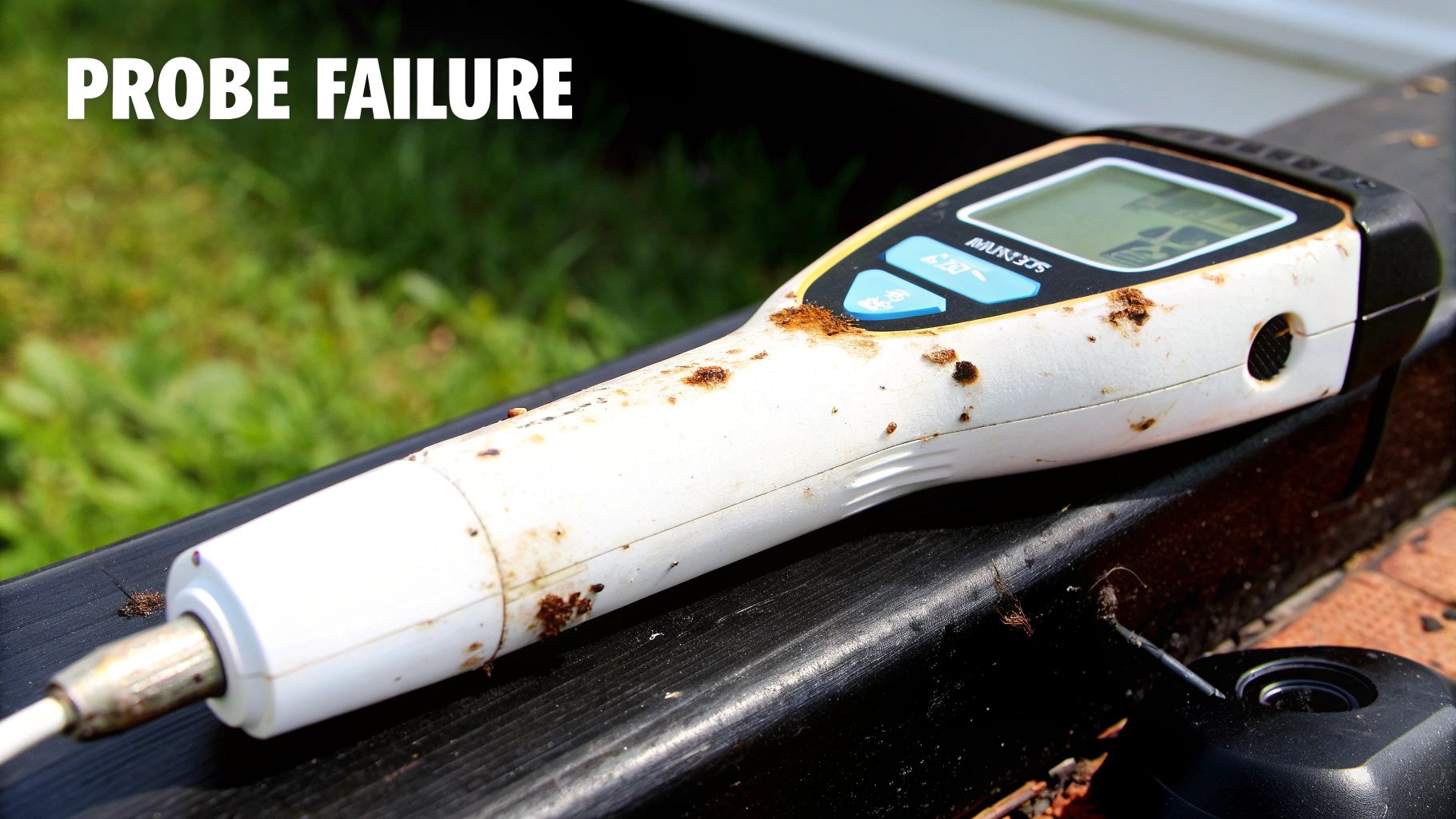
Is it just a temporary glitch, or is your freezer probe trying to tell you something is seriously wrong? Knowing how to spot the difference can save you from a catastrophic inventory loss. A failing Atosa USA W0302316 probe, white, doesn't always just die suddenly; it often gives off clear warning signs first.
The most obvious red flag is a temperature display that makes no sense. If your freezer is frozen solid but the display is reading a balmy 50°F, the probe is almost certainly sending bad information. The same goes for a unit that's constantly kicking on and off, struggling to hold its set temperature—the probe might be the culprit behind the confusion.
Another clear sign is any visible damage. Over time, the harsh freezer environment can lead to corrosion or physical wear on the probe and its wiring, which messes with its ability to send an accurate signal.
Why You Should Replace Your Probe Before It Fails
With a typical operational lifespan of 3-5 years in a busy kitchen, these probes don't last forever. Just waiting for a complete failure is a risky gamble that puts your entire inventory on the line.
A proactive replacement strategy is your best defense against unexpected downtime and spoilage. Swapping out the probe before it fails is a small, smart investment that protects a much larger one—your food inventory.
The global market for these kinds of components, valued at an incredible $2.3 billion in 2023, shows just how essential they are to the industry. As a key player, the Atosa W0302316 probe is a vital part you can easily find to stay ahead of your maintenance schedule. You can discover more about probe market trends and pricing on Parts Town.
Where to Find the Atosa W0302316 Probe
Okay, you’ve done the detective work and confirmed that the temperature probe is the source of your freezer woes. The good news is that the Atosa W0302316 probe is a common part, so you won’t have to search far and wide to find a replacement. A quick online search will bring up several options from different suppliers. Your main goal here is to find a reliable seller who offers a genuine, brand-new part. The last thing you want is to go through the trouble of a replacement only to end up with a faulty or counterfeit component that fails in a few weeks.
While we at The Restaurant Warehouse focus on providing the big-ticket items that form the backbone of your kitchen, like high-quality commercial freezers and prep tables, we know that proper maintenance is what keeps that equipment running smoothly for years. Sourcing the right replacement parts is a huge piece of that puzzle. Think of it as an investment in the longevity of your equipment. Taking a few extra minutes to vet your source and ensure you're getting an authentic OEM (Original Equipment Manufacturer) part will save you a ton of stress and potential downtime later on.
Pricing and Availability
One of the best things about this particular repair is that it won’t break the bank. The Atosa W0302316 probe is a very affordable component, which makes the decision to proactively replace it an easy one. You can typically find this part listed for somewhere between $21 and $27. The price can fluctuate a bit depending on the seller, shipping costs, and whether they’re running any promotions. Because it’s such a reasonably priced part, it’s a smart move to order one and have it on hand, especially if your current probe is getting close to that 3-5 year lifespan we talked about earlier.
What to Look for in a Seller
When you’re shopping online, especially on marketplace sites like eBay, it’s so important to know who you’re buying from. Don’t just jump on the lowest price you see. Take a moment to check out the seller’s profile. You’re looking for someone with a long history of sales and overwhelmingly positive feedback. For example, one listing for this probe is from a seller with a 99.8% positive feedback rating who has been on the platform since 1999. Those are the kinds of credentials that give you confidence that you’re dealing with a trustworthy professional who stands behind their products.
Understanding Shipping and Return Policies
Before you click that "buy" button, always scroll down and read the fine print on shipping and returns. Sometimes, the shipping cost can be almost as much as the part itself—one seller charges around $25 for ground shipping. You need to factor that into your total cost to make sure you’re still getting a good deal. Also, check the return policy. A reputable seller will typically offer a 30-day return window. Even if you have to pay for the return shipping, having the option to send it back if it’s the wrong part or arrives damaged is a critical safety net.
Buyer Protection Programs
Many online platforms offer an extra layer of security through buyer protection programs. For instance, the eBay Money Back Guarantee ensures that you will receive the item you ordered or get your money back. This is a fantastic feature that takes a lot of the risk out of online shopping. It means the platform has your back if the part doesn't show up or isn't as described. Look for these kinds of guarantees, as they are a clear sign that you’re purchasing from a secure and reliable marketplace that prioritizes customer satisfaction.
Important Considerations Before You Buy
You’re almost ready to make your purchase, but there are just a couple more details to confirm. Taking a final look at the product listing to check for any warnings and to verify the part’s specifics is a crucial last step. This final check ensures there are no surprises when your package arrives and that you have the exact component you need to get your freezer back in perfect working order. It’s all about being a thorough and informed buyer, which is a skill that serves every restaurant owner well, whether you're buying a small probe or a new deep fryer.
California Proposition 65 Warning
If you’re in California, you’ll likely see a Proposition 65 warning on the product listing. Don’t let it alarm you. This is a standard notification required by the state for any product that contains chemicals known to cause cancer or reproductive toxicity. You’ll see this warning on a huge range of items, from coffee to furniture. It’s simply a right-to-know law, and its presence on a product listing is a sign of a seller who is compliant with state regulations. It doesn't necessarily mean the product is unsafe when used as intended in your commercial equipment.
Tips for Reading Product Listings
Finally, read the product title and description carefully. You want to see phrases like "brand new" and "OEM Replacement." This confirms you're not buying a used or third-party part that might not perform as well. Double-check that the part number, Atosa W0302316, is clearly listed and matches what you need. The description should also confirm what the part does—it’s a temperature probe designed for freezers. Taking 30 seconds to confirm these details ensures you’re ordering the right component the first time, saving you the hassle of returns and delays.
Your Questions About the W0302316 Probe, Answered
Got questions about the Atosa USA W0302316 probe? You're not alone. Here are some quick, straightforward answers to the things we get asked most often.
Can I Use This Probe in a Refrigerator Too?
Nope, this one's strictly a freezer specialist. The W0302316 probe is calibrated specifically for the low-temperature range of a freezer. If you try to use it in a refrigerator, you'll get inaccurate temperature readings.
That confusion can cause the compressor to run improperly, which not only risks food safety but can also lead to premature equipment failure. It’s a classic case of needing the right tool for the right job, so always match the probe to the unit.
How Do I Know if My Current Probe is Bad?
The most reliable way to check your current probe is with a multimeter. A working probe has a specific electrical resistance (measured in ohms) that changes in a predictable way as the temperature goes up or down.
If you test it and your multimeter shows a completely open circuit (no reading) or a short (zero resistance), then you know it's toast. That's a clear sign the probe has failed and it's time for a replacement.
When it comes to replacement parts, sticking with an Original Equipment Manufacturer (OEM) component is always your best bet. The W0302316 is a genuine Atosa part, so you can be confident it will perform exactly as your freezer was designed to and keep your warranty intact.
Where’s the Best Place to Install a New Probe?
For the most accurate air temperature reading, you'll want to position the new probe right in the center of the freezer cabinet.
It's really important to keep it away from the door, the fans, and the evaporator coils. Those areas are prone to temperature swings that can trick the controller into thinking the freezer is warmer or colder than it actually is. A central location gives you a true average reading of the cabinet's temperature.
Get the genuine Atosa USA W0302316 probe, white you need to keep your equipment running like it should. For all your commercial kitchen parts and equipment, you can trust the experts at The Restaurant Warehouse. Find the right part today at https://therestaurantwarehouse.com.
Key Takeaways
- Know the Warning Signs of a Bad Probe: A freezer probe failure isn't subtle—watch for erratic temperature readings or a compressor that won't shut off. Catching these issues early prevents spoiled food and saves you from a much larger repair bill.
- Always Use the Correct OEM Part: The Atosa W0302316 probe is designed for specific freezer models. Before ordering, double-check your unit's part number to ensure a perfect fit and reliable performance, avoiding the risks that come with incompatible third-party components.
- Replace Proactively for Peace of Mind: This is a simple, inexpensive DIY fix you can handle yourself. Since probes typically last 3-5 years, replacing yours on a schedule—rather than waiting for it to fail—is a smart, low-cost way to protect your valuable inventory.
Related Articles
About The Author

Sean Kearney
Sean Kearney is the Founder of The Restaurant Warehouse, with 15 years of experience in the restaurant equipment industry and more than 30 years in ecommerce, beginning with Amazon.com. As an equipment distributor and supplier, Sean helps restaurant owners make confident purchasing decisions through clear pricing, practical guidance, and a more transparent online buying experience.
Connect with Sean on LinkedIn, Instagram, YouTube, or Facebook.