
Beverage Dispenser

Eurodib USA OASIS3 110 Slush Machine
Eurodib USABeverage & BarSlush Machine, (3) 2.6 gallon tanks, CFC-free cooling system, single piece stainless steel cylindrical evaporator, stainless stee...
View full details
Eurodib USA OASIS2 110 Slush Machine
Eurodib USABeverage & BarSlush Machine, (2) 2.6 gallon tanks, CFC-free cooling system, single piece stainless steel cylindrical evaporator, stainless stee...
View full details
Eurodib USA OASIS1 110 Slush Machine
Eurodib USABeverage & BarSlush Machine, (1) 2.6 gallon tank, CFC-free cooling system, single piece stainless steel cylindrical evaporator, stainless steel...
View full details
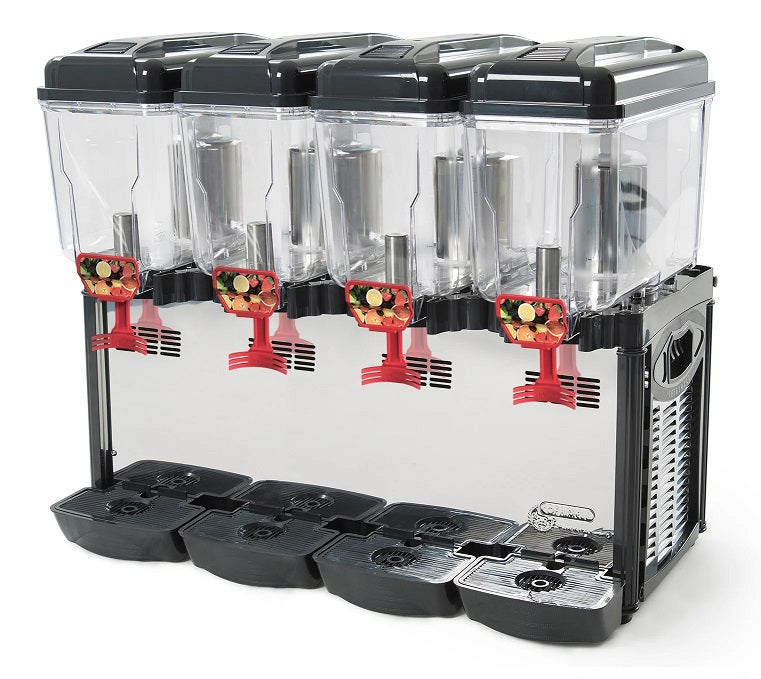
Eurodib USA CD4J110 4 Tank Juice Dispenser
Eurodib USABeverage & BarCofrimell Juice Dispenser, (4) 3 gallon (12 liters) removable polycarbonate bowls, stainless steel evaporator & base, (2)1/16...
View full details
Eurodib USA CD3J110 3 Tank Juice Dispenser
Eurodib USABeverage & BarCofrimell Juice Dispenser, (3) 3 gallon (12 liters) removable polycarbonate bowls, stainless steel evaporator & base, 1/4 hp,...
View full details
Eurodib USA CD2J110 2 Tank Juice Dispenser
Eurodib USABeverage & BarCofrimell Juice Dispenser, (2) 3 gallon (12 liters) removable polycarbonate bowls, stainless steel evaporator & base, 1/6 hp,...
View full details
Eurodib USA CD1J110 1 Tank Juice Dispenser
Eurodib USABeverage & BarCofrimell Juice Dispenser, (1) 3 gallon (12 liters) removable polycarbonate bowl, stainless steel evaporator & base, 1/8 hp, ...
View full details
Thunder Group SLRCF0031GH 2.2 Gallon Juice Dispenser, Stainless Steel With Gold Plated Accents
Thunder Group
Original price
$535.00
Original price
$535.00
-
Original price
$535.00
Original price
$535.00
Current price
$300.00
$300.00
-
$300.00
Current price
$300.00
2.2 Gallon, 10" x 13-7/8" x 23-1/4" Juice Dispenser, Stainless Steel Lid, Center Tube, Base with Gold Accented Knobs and Stem And Polycarbonate Body
Original price
$535.00
Original price
$535.00
-
Original price
$535.00
Original price
$535.00
Current price
$300.00
$300.00
-
$300.00
Current price
$300.00
Save 44%

Atosa CB3L011 Short Single Coffee and Tea Brewer - 160 Cups/Hr, Dual Voltage
Atosa
Original price
$2,200.00
Original price
$2,200.00
-
Original price
$2,200.00
Original price
$2,200.00
Current price
$1,322.00
$1,322.00
-
$1,322.00
Current price
$1,322.00
Atosa CB3L011 Short Single Coffee and Tea Brewer — 160 Cups Per Hour, Dual Voltage The Atosa CB3L011 is a short, single-station commercial coffee ...
View full details
Original price
$2,200.00
Original price
$2,200.00
-
Original price
$2,200.00
Original price
$2,200.00
Current price
$1,322.00
$1,322.00
-
$1,322.00
Current price
$1,322.00
Save 40%


Atosa CB3T011 Tall Single Coffee and Tea Brewer - 160 Cups/Hr, Dual Voltage
Atosa
Original price
$2,360.00
Original price
$2,360.00
-
Original price
$2,360.00
Original price
$2,360.00
Current price
$1,419.00
$1,419.00
-
$1,419.00
Current price
$1,419.00
Atosa CB3T011 Tall Single Coffee and Tea Brewer — 160 Cups Per Hour, Dual Voltage The Atosa CB3T011 is a tall, single-station commercial coffee an...
View full details
Original price
$2,360.00
Original price
$2,360.00
-
Original price
$2,360.00
Original price
$2,360.00
Current price
$1,419.00
$1,419.00
-
$1,419.00
Current price
$1,419.00
Save 40%


Atosa CB3L021 Short Twin Coffee and Tea Brewer - 160 Cups/Hr, Dual Voltage
Atosa
Original price
$2,940.00
Original price
$2,940.00
-
Original price
$2,940.00
Original price
$2,940.00
Current price
$1,767.00
$1,767.00
-
$1,767.00
Current price
$1,767.00
Atosa CB3L021 Short Twin Coffee and Tea Brewer — 160 Cups Per Hour, Dual Voltage The Atosa CB3L021 is a short, twin-station commercial coffee and ...
View full details
Original price
$2,940.00
Original price
$2,940.00
-
Original price
$2,940.00
Original price
$2,940.00
Current price
$1,767.00
$1,767.00
-
$1,767.00
Current price
$1,767.00
Save 40%


Atosa CB3T021 Tall Twin Coffee and Tea Brewer - 160 Cups/Hr, Dual Voltage
Atosa
Original price
$3,100.00
Original price
$3,100.00
-
Original price
$3,100.00
Original price
$3,100.00
Current price
$1,863.00
$1,863.00
-
$1,863.00
Current price
$1,863.00
Atosa CB3T021 Tall Twin Coffee and Tea Brewer — 160 Cups Per Hour, Dual Voltage The Atosa CB3T021 is a tall, twin-station commercial coffee and te...
View full details
Original price
$3,100.00
Original price
$3,100.00
-
Original price
$3,100.00
Original price
$3,100.00
Current price
$1,863.00
$1,863.00
-
$1,863.00
Current price
$1,863.00
Save 40%

Atosa CD-15-NL 1.5 Gallon Insulated Coffee Dispenser - Brew-Through Lid, No Stand
Atosa
Original price
$588.00
Original price
$588.00
-
Original price
$588.00
Original price
$588.00
Current price
$354.00
$354.00
-
$354.00
Current price
$354.00
Atosa CD-15-NL 1.5 Gallon Insulated Coffee Dispenser — Brew-Through Lid, No Stand The Atosa CD-15-NL is a 1.5 gallon commercial coffee dispenser b...
View full details
Original price
$588.00
Original price
$588.00
-
Original price
$588.00
Original price
$588.00
Current price
$354.00
$354.00
-
$354.00
Current price
$354.00
Save 40%

Atosa CD-15-L 1.5 Gallon Insulated Coffee Dispenser - Level Indicator, No Stand
Atosa
Original price
$600.00
Original price
$600.00
-
Original price
$600.00
Original price
$600.00
Current price
$361.00
$361.00
-
$361.00
Current price
$361.00
Atosa CD-15-L 1.5 Gallon Insulated Coffee Dispenser — Level Indicator, Brew-Through Lid, No Stand The Atosa CD-15-L is a 1.5 gallon commercial cof...
View full details
Original price
$600.00
Original price
$600.00
-
Original price
$600.00
Original price
$600.00
Current price
$361.00
$361.00
-
$361.00
Current price
$361.00
Save 40%


Atosa CD-15-NL-WS 1.5 Gallon Insulated Coffee Dispenser with Stand
Atosa
Original price
$706.00
Original price
$706.00
-
Original price
$706.00
Original price
$706.00
Current price
$425.00
$425.00
-
$425.00
Current price
$425.00
Atosa CD-15-NL-WS 1.5 Gallon Insulated Coffee Dispenser with Stand — Brew-Through Lid The Atosa CD-15-NL-WS is a 1.5 gallon commercial coffee disp...
View full details
Original price
$706.00
Original price
$706.00
-
Original price
$706.00
Original price
$706.00
Current price
$425.00
$425.00
-
$425.00
Current price
$425.00
Save 40%


Atosa CD-15-L-WS 1.5 Gallon Insulated Coffee Dispenser with Stand - Level Indicator
Atosa
Original price
$718.00
Original price
$718.00
-
Original price
$718.00
Original price
$718.00
Current price
$432.00
$432.00
-
$432.00
Current price
$432.00
Atosa CD-15-L-WS 1.5 Gallon Insulated Coffee Dispenser with Stand — Level Indicator, Brew-Through Lid The Atosa CD-15-L-WS is a 1.5 gallon commerc...
View full details
Original price
$718.00
Original price
$718.00
-
Original price
$718.00
Original price
$718.00
Current price
$432.00
$432.00
-
$432.00
Current price
$432.00
Save 40%


Atosa TD-3L-ND 3 Gallon Stainless Steel Iced Tea Dispenser - Short, No Drip Tray
Atosa
Original price
$165.00
Original price
$165.00
-
Original price
$165.00
Original price
$165.00
Current price
$100.00
$100.00
-
$100.00
Current price
$100.00
Atosa TD-3L-ND 3 Gallon Stainless Steel Iced Tea Dispenser — Short, No Drip Tray The Atosa TD-3L-ND is a 3 gallon commercial iced tea dispenser bu...
View full details
Original price
$165.00
Original price
$165.00
-
Original price
$165.00
Original price
$165.00
Current price
$100.00
$100.00
-
$100.00
Current price
$100.00
Save 39%


Atosa TD-3T-DT 3 Gallon Stainless Steel Iced Tea Dispenser - Tall, with Drip Tray
Atosa
Original price
$169.00
Original price
$169.00
-
Original price
$169.00
Original price
$169.00
Current price
$102.00
$102.00
-
$102.00
Current price
$102.00
Atosa TD-3T-DT 3 Gallon Stainless Steel Iced Tea Dispenser — Tall, with Drip Tray The Atosa TD-3T-DT is a 3 gallon commercial iced tea dispenser w...
View full details
Original price
$169.00
Original price
$169.00
-
Original price
$169.00
Original price
$169.00
Current price
$102.00
$102.00
-
$102.00
Current price
$102.00
Save 40%


Atosa TD-5L-ND 5 Gallon Stainless Steel Iced Tea Dispenser - Short, No Drip Tray
Atosa
Original price
$186.00
Original price
$186.00
-
Original price
$186.00
Original price
$186.00
Current price
$112.00
$112.00
-
$112.00
Current price
$112.00
Atosa TD-5L-ND 5 Gallon Stainless Steel Iced Tea Dispenser — Short, No Drip Tray The Atosa TD-5L-ND is a 5 gallon commercial iced tea dispenser bu...
View full details
Original price
$186.00
Original price
$186.00
-
Original price
$186.00
Original price
$186.00
Current price
$112.00
$112.00
-
$112.00
Current price
$112.00
Save 40%


Atosa TD-5T-DT 5 Gallon Stainless Steel Iced Tea Dispenser - Tall, with Drip Tray
Atosa
Original price
$196.00
Original price
$196.00
-
Original price
$196.00
Original price
$196.00
Current price
$118.00
$118.00
-
$118.00
Current price
$118.00
Atosa TD-5T-DT 5 Gallon Stainless Steel Iced Tea Dispenser — Tall, with Drip Tray The Atosa TD-5T-DT is a 5 gallon commercial iced tea dispenser w...
View full details
Original price
$196.00
Original price
$196.00
-
Original price
$196.00
Original price
$196.00
Current price
$118.00
$118.00
-
$118.00
Current price
$118.00
Save 40%
Beverage Dispenser Buying Guide
Choose a commercial beverage dispenser around the drinks you serve, your busiest service period and the space available. This guide brings together refrigerated juice dispensers, slush machines, frozen-drink planning, coffee equipment and hot-beverage service so you can compare formats before choosing a model.
Easy and Efficient Beverage Service
A well-planned dispenser station keeps drinks organized and lets customers serve themselves where appropriate. Look for a comfortable dispensing handle, room for your actual cups, an accessible drip tray and a refill route that does not interrupt the queue. Self-service can reduce individual pouring tasks, but staff still need to monitor temperature, cleanliness, beverage levels and spills.
Restaurants, cafés, hotels, breakfast buffets, cafeterias, concession stands and catered events have different service needs. For a permanent station, prioritize sustained performance and access for cleaning. For event service, also consider transport, stable support, available utilities and the manufacturer's permitted operating environment; a portable dispenser is not automatically outdoor-rated.
Compare Commercial Beverage Equipment Formats
Separate chilling, freezing, brewing and holding when comparing equipment. A dispenser that holds a prepared drink is not necessarily a machine that makes it, and a cold beverage bowl should never be assumed suitable for hot coffee or dairy.
| Format | Service role | What to check before choosing |
|---|---|---|
| Refrigerated juice dispenser | Chill and dispense a compatible, prepared cold beverage | Ingredient restrictions, tank count, cooling performance, power and ventilation |
| Ice-core beverage dispenser | Present and serve pre-chilled drinks with a separate ice chamber | Ice replenishment, temperature monitoring, capacity and transport |
| Slush or granita machine | Freeze and agitate an approved liquid mix for dispensing | Mix requirements, bowl count, recovery under demand and cleaning access |
| Coffee brewer | Prepare batches of brewed coffee | Batch size, brewing recovery, manual-fill or plumbed supply and compatible servers |
| Commercial espresso machine | Prepare espresso-based drinks with the chosen level of operator control | Groups, steam capacity, grinder workflow, water treatment, power and service support |
| Hot-beverage server or dispenser | Hold and serve a beverage prepared elsewhere, unless brewing is explicitly included | Approved beverage, insulated or powered holding, cleaning and safe dispensing |
The coffee, espresso and hot-beverage sections below are buying and setup guidance, not a statement that every format is currently offered. Confirm availability, included accessories and exact specifications in the individual product listing before ordering.
Refrigerated Juice Dispensers for Restaurants and Buffets
A refrigerated beverage dispenser combines cold-beverage holding and dispensing in one station. Compare a single-tank juice dispenser for one dependable menu item with two-, three- or four-tank configurations for a wider breakfast or cafeteria drink selection. Size each flavor separately: four tanks do not help if most customers choose one beverage and that tank repeatedly runs out.
Begin with the actual recipe rather than the word “juice.” Confirm whether the machine permits the drink's pulp, viscosity, dairy ingredients and other additions. Eurodib specifically states that its CD-series juice dispensers are not suitable for milk or fruit juices with pulp; a wide tap or mixing paddle does not override that restriction (Eurodib CD4J specifications).
Eurodib Juice Dispenser Comparison
Use tank count to narrow your layout, then open the product listing for the model-specific purchasing details. Check standard bowl capacity separately from optional larger bowls, along with the filled weight, overall dimensions and required operating clearance.
| Model | Tank configuration | Planning consideration |
|---|---|---|
| Eurodib CD1J110 | 1 tank | One signature beverage or a compact secondary station |
| Eurodib CD2J110 | 2 tanks | Two beverage choices without moving to a larger multi-flavor layout |
| Eurodib CD3J110 | 3 tanks | A broader selection with separate refill and cleaning needs for each tank |
| Eurodib CD4J110 | 4 tanks | A multi-choice station where counter width and demand by flavor justify four tanks |
For a breakfast buffet, place cups, beverage labels and the dispenser in a clear sequence, leaving space for guests to step aside after pouring. For a staff-served café, position the machine within the drink-preparation route rather than behind unrelated equipment. Neither layout should block condenser ventilation, lid removal or access to the taps.
Refrigerated Versus Ice-Core Juice Dispensers
Do not treat an ice-core dispenser as a plug-in refrigerator. The Thunder Group SLRCF0031GH 2.2-gallon juice dispenser uses a separate ice cylinder and has a polycarbonate container with a stainless-steel base and gold-plated accents; its cooling arrangement is different from the mechanically refrigerated Eurodib CD machines (Thunder Group model specifications).
| Selection point | Refrigerated dispenser | Ice-core dispenser |
|---|---|---|
| Cooling method | Powered refrigeration, subject to the model's operating limits | A separate ice chamber; monitor the drink and replenish ice as needed |
| Station planning | Check power, ventilation and service access | Plan pre-chilling, ice supply and refilling access |
| Refilling | Follow the manual's starting-temperature and fill instructions | Use an appropriate pre-chilled beverage and monitor service conditions |
| Best purchasing question | Can this unit maintain the required conditions under our service demand? | Can our staff maintain suitable conditions throughout the planned service? |
An ice core keeps cooling ice separate from the drink, helping avoid dilution from loose melting ice in the beverage. It does not establish a guaranteed safe holding time; choose a temperature-monitoring and refill procedure appropriate to the drink and your local requirements.
Materials, Presentation and Replacement Parts
Clear beverage bowls make it easier to see drink levels and identify flavors. Compare the exact material rather than treating acrylic, polycarbonate and glass as interchangeable: inspect handling requirements, approved cleaning methods, scratch resistance and replacement-bowl availability. An opaque stainless-steel server may need a separate method for checking the remaining volume.
Ask about replacement taps, lids, seals, bowls and drip trays before choosing equipment for frequent service. For the Thunder Group SLRCF0031GH, the manufacturer explicitly says it is not dishwasher-, oven- or microwave-safe; it also does not list NSF, UL or ETL certification for that model, so verify the exact equipment against your operation's requirements rather than relying on a category-wide certification claim (Thunder Group care and certification details).
Glass Beverage Dispensers for Catering and Buffet Service
If you are considering a glass drink dispenser for a catered event or buffet, evaluate the complete serving setup rather than choosing by appearance alone. Compare the filled weight, stand stability, tap clearance and access for cleaning with the demands of your staff and guests. This is selection guidance, not a claim that a glass model is currently stocked.
- Tap and replacement seals: Check for smooth operation, a secure closure and access to replacement washers or seals. Follow the assembly instructions and check for leaks before the service begins.
- Stand and cup clearance: Confirm the support is suitable for the filled dispenser and leaves space for your tallest serving cup and drip tray. Keep the station away from counter edges and busy collision points.
- Lid and refill opening: Look for practical access for filling, washing and inspection. Use the lid and any venting features as designed rather than assuming every serving dispenser should be sealed airtight.
- Handling and storage: Check the manufacturer's temperature limits, cleaning method and transport instructions. Do not assume a decorative glass container is approved for hot liquids, dishwasher cleaning or commercial service.
Choose infusers, ice cores and other accessories only where the dispenser manufacturer permits them. Keep garnishes outside the dispensing vessel when they could obstruct the tap, and plan protected storage for the vessel, stand and removable parts between events.
Commercial Slush Machines and Frozen Beverage Dispensers
A slush machine refrigerates an appropriate liquid mix while an auger or mixing mechanism keeps it moving as it freezes. That process differs from shaving solid ice and adding flavor afterward. Prepare and dilute the mix as directed before filling a manual-fill machine; do not assume it automatically measures dry powder, syrup and water for you.
For restaurants, convenience stores, concessions and bars, compare the number of bowls with the number of flavors you can sell consistently. A single-bowl commercial slushie machine can support a focused menu, while a double- or triple-bowl machine gives more flavor choices. Additional bowls also mean more counter space, ingredient inventory, cleaning and potential leftovers.
Eurodib OASIS Slush and Granita Machines
| Model | Bowl configuration | How to evaluate it |
|---|---|---|
| Eurodib OASIS1 110 | 1 bowl | Compare for one signature frozen drink, limited space or a measured menu trial |
| Eurodib OASIS2 110 | 2 bowls | Compare for two flavors while checking demand, refills and cleaning by bowl |
| Eurodib OASIS3 110 | 3 bowls | Compare for a broader menu where sales volume supports three prepared flavors |
Eurodib lists the OASIS3 with three 10-liter bowls, each described as 2.6 gallons. This is a bowl-capacity specification, not a drinks-per-hour rating or a promise that the entire nominal volume can be dispensed without observing minimum fill levels (Eurodib OASIS3 specifications).
Eurodib describes OASIS machines as designed for powdered or syrup mixes diluted with water only and specifies a minimum of 13° Brix. Too little sugar can allow the product to freeze solid and damage the machine, while excessive sugar can prevent proper freezing; follow the full model and mix instructions rather than treating the minimum as a complete recipe (Eurodib OASIS operating guidance).
Compare Recovery, Not Just Bowl Size
Ask how the selected model performs during repeated dispensing and replenishment with your intended mix. Initial freeze time, recovery after refilling and sustained service output are different measurements. Warm replacement mix, the operating environment, recipe formulation and service demand all belong in your evaluation; a large bowl alone does not establish fast recovery.
Request a demonstration or documented performance information under conditions relevant to your operation. Compare control simplicity, removable food-contact parts, dispensing ergonomics and access for maintenance. Treat automatic cleaning, auto-fill, independent bowl operation and separate refrigeration systems as features to verify on the exact model, not assumptions attached to the term “commercial.”
Check after-hours operation and service support: Before buying a commercial slush machine, ask whether the exact model offers a refrigerated standby mode and what the manufacturer permits for overnight product holding. Do not assume standby replaces required cleaning or makes every mix safe to keep overnight. Confirm parts-and-labor warranty coverage, local service availability, and lead times for replacement seals and auger components so you can plan for maintenance and downtime.
Frozen Margaritas, Frosé and Specialty Drink Planning
Choose frozen-cocktail equipment by the complete recipe, including the alcohol, sugar, fruit content and any dairy ingredients. “Frozen drink machine” does not mean every recipe is approved. A machine selected for water-based slush should not automatically be promoted for milk-based frozen coffee, pulpy drinks or wine-based frosé.
For OASIS models, Eurodib permits certain spirits such as vodka, tequila or rum within its formulation guidance, but expressly excludes premixed canned or bottled drinks, including beer, wine, cider and coolers. That makes OASIS an inappropriate recommendation for a wine-based frosé recipe; choose equipment with explicit manufacturer approval for that application instead (Eurodib ingredient restrictions).
For a frozen margarita program, obtain an approved formulation for the exact machine and mix rather than applying a generic alcohol percentage from a recipe article. Do not assume that adding more alcohol, removing sugar or substituting a sugar-free sweetener preserves freezing performance. Record the final formulation and train staff to reproduce it consistently.
A two-flavor setup can be evaluated for separate alcoholic and non-alcoholic offerings, but bowl separation alone is not an allergen or alcohol-control procedure. Use clear labels, separate appropriate preparation utensils and a service arrangement that meets local alcohol-service rules. Keep garnish preparation outside the machine unless the manufacturer specifically allows the ingredients in the bowl.
Start with a manageable menu and record servings, refill frequency and unsold mix by flavor. Rotate a seasonal option only when staff can follow its approved recipe and cleaning procedure. A colorful display may help customers notice the menu, but buy capacity around observed or realistically forecast demand, not an assumed sales increase.
Coffee Brewers, Dispensers and Espresso Planning
For commercial coffee and tea brewers, insulated coffee dispensers and coffee-station planning, visit our Commercial Coffee Machines collection. Its dedicated guide compares the Atosa CB3 brewers and CD-15 dispensers, with advice on capacity, installation, cleaning and service workflow.
We also plan to offer espresso machines. Our commercial espresso machine buying guide explains the equipment, staffing and installation questions to work through before choosing a model. Specific espresso models and availability will be established by their product listings when introduced.
Planning a café station? Use the coffee grinder selection checklist alongside the espresso guide so brewing and grinding decisions support the same service needs.
Hot Beverage Dispensers for Coffee, Tea and Catering
Choose a hot-beverage dispenser by the drink it is approved to handle and by whether you need brewing, active heating or insulated holding. A coffee urn may brew as well as serve, while an airpot or thermal server may simply hold coffee brewed elsewhere. Verify the function of the specific product instead of relying on its name.
| Format to evaluate | Potential service role | Purchase checks |
|---|---|---|
| Brewing urn | Prepare and serve a larger batch where the model includes brewing | Actual brewing capacity, cycle time, power, cup-size definition and approved drinks |
| Airpot or insulated server | Move prepared coffee to a satellite or event station | Brewer compatibility, usable volume, safe transport and cleaning access |
| Powered hot-water dispenser | Provide a separate supply for tea and other approved uses | Draw-off demand, recovery, water supply, temperature controls and installation |
| Dedicated hot-chocolate dispenser | Heat or hold a compatible specialty drink according to its design | Dairy and ingredient approval, agitation, cleaning and temperature-control instructions |
A separate hot-water unit is worth evaluating when tea and other hot-water requests interrupt the espresso workflow. Confirm recovery under repeated use rather than assuming the tank's total volume is continuously available at the required temperature. Keep the dispensing area stable and accessible, with appropriate attention to hot surfaces and scald risk.
For hot chocolate or other milk- and sugar-containing beverages, choose equipment explicitly approved for the recipe. Do not pour them into an ordinary coffee brewer, cold juice bowl or hot-water tank unless the manufacturer authorizes that use. Insulation, agitation and a thermostat do not replace the required food-safety monitoring and cleaning procedure.
At an event, plan how drinks will be prepared, transported, labeled, served and replenished. Confirm whether the server requires power during holding, how staff will check conditions and what happens to unsold product. Avoid promising a fixed number of safe holding hours from insulation alone.
Commercial Soda Dispensers and Fountain Beverage Planning
A commercial soda dispenser belongs in the equipment discussion when you are planning fountain drinks, sparkling beverages or a bar mixer station. The Restaurant Warehouse does not currently offer soda dispensers in this collection. Use this section to define a future installation; it is not an announcement of available models or a promised release date.
Pre-Mix Versus Post-Mix Soda Systems
Start by separating ready-mixed beverage delivery from on-site mixing. A pre-mix system dispenses a beverage that has already been prepared, while a post-mix system combines syrup with carbonated or plain water at dispensing. Cornelius describes the post-mix process as cooling the product and water, delivering syrup, and proportioning the ingredients at the dispensing valve (Cornelius post-mix system guide).
| Planning question | Pre-mix | Post-mix |
|---|---|---|
| What reaches the dispenser? | A prepared beverage supplied for the system | Separate syrup and water supplies combined during dispensing |
| What storage is needed? | Space for the supplied beverage containers and replacements | Space for syrup containers, pumps and the specified supporting equipment |
| What should the supplier confirm? | Compatible beverage packaging, cooling, dispensing arrangement and replenishment | Water quality and supply, syrup connections, carbonation, cooling and ratio calibration |
| How should costs be compared? | Prepared-beverage supply, delivery, storage, equipment and service | Syrup, water treatment, CO₂ where used, installation, calibration and service |
Neither format should be selected on a blanket promise of higher profits. Compare the complete installed system, beverage supply agreement, expected servings, waste and maintenance. Confirm syrup-package connectors and supplier restrictions before assuming that any brand of syrup will work with the selected post-mix equipment.
Fountain Stations, Soda Guns and Ice Integration
Compare a customer-facing fountain station with a staff-operated dispenser or bar gun around the actual service route. Count the drinks you need to offer, then review valve assignments, non-carbonated options, portion-control features and cleaning access on the proposed model. Ask which pumps, cooling components and supplies are housed remotely; the dispensing head's footprint is not the footprint of the complete system.
An ice-and-beverage dispenser is not necessarily an ice maker. Some arrangements use manually added ice, while others accept a separately specified ice machine. Confirm the approved ice type, adapter, bin-level control, loaded support and access for cleaning before pairing equipment; Lancer's Sensation 44 manual, for example, requires an adapter plate and bin thermostat for its optional ice-maker installation (Lancer ice-maker compatibility guidance).
Evaluate ice production, storage and replenishment separately from beverage output. A large ice bin does not establish how quickly the system can recover during a rush. Likewise, the conventional slush machines described above should not be assumed to make frozen carbonated beverages; select equipment explicitly designed for that application.
Installation, CO₂ and Drink Consistency
Have a qualified beverage-equipment installer review potable water, filtration, backflow protection, drainage, electrical requirements, ventilation and service access for the exact system. Include syrup-box storage and changeover space in the layout. Use model-specific installation documents rather than copying universal water-pressure, drain-distance or clearance figures from a general buying guide.
CO₂ storage and distribution require a professional safety review, including cylinder security, leak prevention and any ventilation or detection requirements applicable to the site. CO₂ can displace oxygen, so this is not a do-it-yourself installation task. The Lancer operation manual specifies qualified installation and warns about CO₂ exposure.
Ask who will commission the fountain and check each beverage's specified syrup-to-water ratio, often called “brixing” in fountain service. Follow the beverage supplier's formulation and the equipment's test procedure rather than imposing one ratio on every drink. Cornelius documents valve-ratio checks as a distinct setup task; this is different from using a slush mix's minimum °Brix specification to assess freezing suitability (post-mix flow and ratio guidance).
Size Your Beverage Station for the Rush
Begin with serving size, expected servings during the busiest period and the realistic refill interval. Estimate each beverage separately, then check whether the machine can prepare, chill or freeze replacement product fast enough. Allow for recipe-specific fill limits, the volume needed to keep the machine operating and normal service losses.
For a simple planning example, 40 servings at 12 fluid ounces require 480 fluid ounces, or 3.75 US gallons, before allowing for losses or any minimum operating level. This is a beverage-volume calculation, not a machine output claim; a dispenser may need refilling during that service and a frozen machine may need recovery time after the refill.
Compare forecast demand with observations after launch. Record when each tank needs filling, which flavors are left over, how long customers wait and whether staff can clean the station without disrupting the next service. If one flavor dominates, distributing volume across more flavors may be less useful than improving capacity for the popular drink.
Counter Space, Clearances and Utilities
- Measure the complete station: Include cups, drip trays, labels, ingredient staging, lid removal and the customer approach, not just the machine's width.
- Check loaded weight: Confirm that the counter or stand supports the equipment plus the filled beverage containers and normal service handling.
- Protect ventilation: Use the installation manual's clearances and permitted environment; do not enclose an air-cooled machine simply because it fits beneath a shelf.
- Review the electrical load: Verify the exact voltage, amperage, plug and circuit requirements with the installation professional.
- Plan refill access: Keep prepared mix, suitable storage and cleaning facilities within a practical staff route without obstructing customers.
- Check model-specific approvals: Confirm the electrical, sanitation and application requirements for your location rather than assuming every commercial product carries the same listings.
For catering, separate front-of-house presentation from the replenishment area. Keep drinks labeled, provide space beneath the tap for the actual cup and place garnishes separately when ingredients could clog or violate the dispenser's restrictions. Follow the transport instructions, and avoid moving a filled unit unless its design and handling guidance permit it.
Cleaning, Maintenance and Troubleshooting
Make cleanability part of the purchase decision. Ask staff to review how bowls, taps, augers, drip trays and seals come apart, what tools or approved lubricants are required and how much space is needed to wash and dry components. Compare replacement-part access before downtime becomes a problem.
Build the written cleaning schedule from the equipment manual, the drink being served and applicable food-safety requirements. Do not use a generic weekly tap-cleaning or monthly deep-cleaning schedule as a substitute for the required food-contact cleaning frequency. Rinsing alone is not a complete cleaning and sanitizing process.
- Handle remaining beverage according to the operation's approved procedure, then shut down and isolate equipment as directed before disassembly.
- Remove the food-contact parts identified in the manual and wash them using approved methods and chemicals.
- Rinse and sanitize as required, following the sanitizer label for concentration and contact time.
- Allow parts to air-dry where directed, inspect seals and reassemble according to the manual.
- Complete the required startup checks before refilling and returning the dispenser to service.
Use only approved descaling products and procedures for coffee and hot-water equipment. For espresso machines, train staff in the model-specific group, steam-system and milk-system cleaning tasks; do not substitute a universal backflushing or descaling schedule. An automatic cleaning feature does not establish that every food-contact component has been cleaned.
| Problem observed | Checks within the operating instructions | When to stop and seek service |
|---|---|---|
| Slush stays too liquid | Check approved recipe, fill level, settings, ventilation and permitted operating environment | Persistent failure, error codes or a suspected refrigeration problem |
| Mix freezes solid or agitation stalls | Check whether the recipe meets the manufacturer's formulation requirements | Stop operation as directed; do not force a stalled mechanism or continue damaging operation |
| Tap leaks or dispenses poorly | Check approved cleaning, correct assembly, seals and permitted ingredients | Damaged components, recurring leaks or parts that cannot be reassembled correctly |
| Coffee quality or recovery changes | Review recipe, grinder setup, water treatment and scheduled cleaning | Persistent temperature, pressure, electrical or water-system problems |
Keep electrical, refrigeration and internal repair work within qualified service procedures. Do not defeat guards, adjust protected controls or add refrigerant as an improvised fix. Record recurring issues so the technician can distinguish a recipe or setup problem from equipment failure.
Compare Total Cost, Not Just Equipment Price
Request a comparison that includes equipment, compatible servers or bowls, installation, water treatment, cleaning supplies, training and service access. Add the ingredient, cup, lid and other consumable costs for your actual menu. A larger dispenser or a more automated coffee machine should solve a measured service need, not simply add unused capacity.
Calculate contribution per drink using selling price less the variable costs you include, then state those costs explicitly. For example, an assumed $5 selling price less $1.50 in ingredients and serving consumables leaves $3.50 before labor, utilities, payment fees, waste, equipment and overhead. It is not a net-profit margin or a forecast of what your business will earn.
Track waste, preparation and cleaning time alongside sales. Compare energy claims on a common documented basis; nameplate power alone is not a daily consumption figure. If considering financing, compare the written total payments and conditions with an outright purchase rather than assuming a payment plan is automatically the lower-cost choice.
Commercial Beverage Equipment FAQs
What is the difference between a beverage dispenser and a juice dispenser?
Beverage dispenser is a broad description covering different drinks and operating methods. A juice dispenser may use powered refrigeration or an ice-core arrangement, so confirm cooling method and ingredient approval on the actual model.
Can Eurodib CD juice dispensers handle milk or orange juice with pulp?
Eurodib excludes milk and fruit juices with pulp from its CD juice dispenser application guidance. Select another documented-compatible machine for those drinks instead of assuming that removing some solids or using a wider tap makes the recipe acceptable (Eurodib CD2J restrictions).
Should I buy one, two or three slush bowls?
Match bowl count to the number of flavors you can sell and maintain consistently. Compare demand per flavor, recovery, counter space and cleaning workload before treating more bowls as the better purchase.
Can I use an OASIS machine for frosé?
Not for a wine-based frosé recipe under Eurodib's published restrictions, which exclude wine along with beer, cider, coolers and premixed canned or bottled beverages. Look for a model explicitly approved for the intended wine-based formulation (Eurodib OASIS3 ingredient guidance).
Can I make sugar-free slush in any commercial slushie machine?
No universal recipe rule applies to every machine. Eurodib specifies a minimum of 13° Brix for OASIS, so do not replace an approved mix with plain water or a sugar-free recipe without documented manufacturer approval (Eurodib OASIS formulation requirements).
Where can I compare coffee brewers and espresso equipment?
Visit Commercial Coffee Machines for the current Atosa brewer and dispenser lineup, model comparisons and coffee-specific buying guidance. That collection also contains planning guidance for our intended espresso-machine expansion; confirm model availability in individual product listings.
Can I put hot chocolate into a regular beverage dispenser?
Only use a dispenser whose manufacturer approves that beverage and temperature range. Cold juice equipment, hot-water dispensers and ordinary coffee brewers should not be treated as interchangeable with a dedicated hot-chocolate machine.
Can beverage bowls and taps go in the dishwasher?
Follow the model's cleaning instructions for every removable component. For example, Thunder Group labels the SLRCF0031GH as not dishwasher-safe, so a general recommendation to machine-wash all dispenser parts would be incorrect (Thunder Group cleaning restrictions).
What should I confirm before ordering?
Confirm drink compatibility, service capacity, dimensions, loaded support requirements, utilities, cleaning, applicable approvals and replacement-part support. Use the linked model listings to narrow the selection, then resolve installation and recipe questions before committing to equipment.
Does The Restaurant Warehouse currently sell soda fountain dispensers?
Not in this collection at present. The soda section is planning guidance so you can understand system choices and installation questions; it does not establish current inventory or a future availability date.
Does an ice-and-beverage dispenser make its own ice?
Do not assume it does. Confirm whether the specified system requires manual ice filling or an approved separate ice maker, and check the required adapter and controls before ordering; see the Lancer installation example.
Can I use a decorative glass drink dispenser for commercial service?
Check the exact model's approved use, temperature limits and cleaning requirements, along with the rules that apply to your operation. Appearance and nominal gallon capacity do not establish suitability; also review tap serviceability, full-container support and safe handling.